 Gold Coin Catalogue
How we date ancient coins
Almost no ancient coin carries a date. Hoards, digs, old writers and the lab tell us when each was made.
The puzzle
No date, often no name
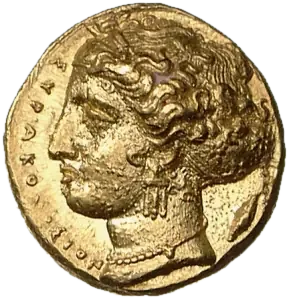
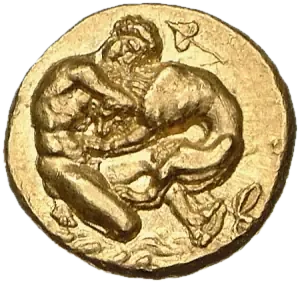
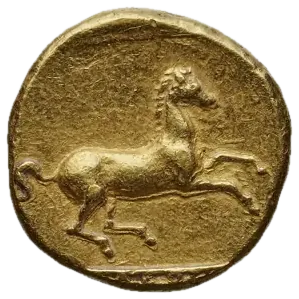
Almost no ancient coin carries a year. Syracuse's gold 100 litrai names only the city, and experts still disagree about when it was struck by some thirty years.
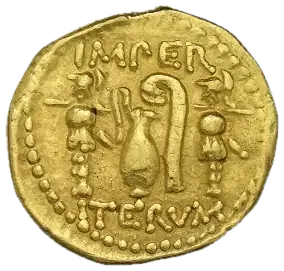
Even a coin that names a day can mislead. Brutus's famous EID MAR coin celebrates the Ides of March 44 BC, the day Caesar was killed, but it was struck about two years later, in 43–42 BC, to pay his army in Greece. So every date on a coin card is a conclusion drawn from evidence. This lesson shows that evidence: hoards, digs, graves, ancient writers, records on stone and papyrus, find spots, clues on the coin itself and the lab, and then the arguments that are still open.
Münzkabinett, Staatliche Museen zu Berlin · CC BY-SA 4.0
Münzkabinett, Staatliche Museen zu Berlin · CC BY-SA 4.0
Sources
- Crawford, Roman Republican Coinage (1974) no. 508/3 (EID MAR)
Narrowing the window
Each clue says 'made after' or 'made before' a date. Put enough of them together and the window closes in.
Historians use two Latin terms: a terminus post quem, the date after which something must be, and a terminus ante quem, the date before which. A ruler's title or the style of the engraving gives an 'after'. A hoard buried, a city burned or a grave closed gives a 'before'. A coin missing from a hoard is a weaker clue: it may simply not have reached that place yet.
Sources
- Howgego, Ancient History from Coins (1995)
Hoards
Hoxne: the newest coin sets the date
In 1992 a man looking for a lost hammer in a field at Hoxne, in Suffolk, found 569 gold solidi among nearly 15,000 coins, with gold jewellery and silver tableware.
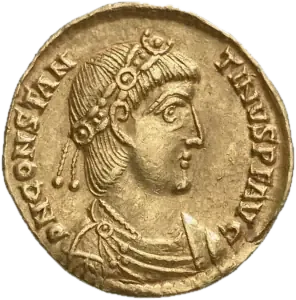
A hoard cannot have been buried before its newest coin was made. The newest here are two silver coins of Constantine III, a soldier proclaimed emperor in Britain in 407, struck at Lyon about 407–408. So the treasure went into the ground after that, in the years when Roman rule in Britain ended. The hoard is in the British Museum.
Münzkabinett, Staatliche Museen zu Berlin · CC BY-SA 4.0
Source: The Hoxne Hoard (overview, with the British Museum's numbers) ↗
Sources
- Guest, The Late Roman Gold and Silver Coins from the Hoxne Treasure (British Museum, 2005)
Why the gold stayed in the ground
People buried their savings in dangerous times. The hoards we find are the ones whose owners never came back, so hoards cluster in wars.
In 1969 the British historian Michael Crawford counted the hoards of the Roman Republic and found peaks in its civil wars, such as the 80s BC, when Sulla fought his way back to Rome, and the years after Caesar crossed the Rubicon in 49 BC. Far outside the empire, many 5th-century solidi lie in hoards on the Baltic islands of Öland, Gotland and Bornholm, often hidden in house foundations. A map of hoards is partly a map of trouble, and a gap in the hoards may mean peace rather than no coins.
Münzkabinett, Staatliche Museen zu Berlin · CC BY-SA 4.0
Sources
- Crawford, 'Coin hoards and the pattern of violence in the late Republic', Papers of the British School at Rome 37 (1969)
- Fagerlie, Late Roman and Byzantine Solidi Found in Sweden and Denmark (1967)
Hundreds of hoards make a timeline
Line up many hoards and the order of the coin issues falls out: an issue found only in later hoards was struck later.
Crawford used this, with the coins' weights and styles, to put every Roman Republican issue in order in Roman Republican Coinage (1974). Its numbers, 'RRC', are still how collectors name those coins. For Greek coins, the Inventory of Greek Coin Hoards (1973) listed 2,387 hoards, and its online successor, CoinHoards.org, keeps adding more.
Source: CoinHoards.org, the online inventory of Greek hoards (American Numismatic Society) ↗
Sources
- Crawford, Roman Republican Coinage (1974)
- Thompson, Mørkholm and Kraay, An Inventory of Greek Coin Hoards (1973)
Digs
Ephesus: the first coins in the ground
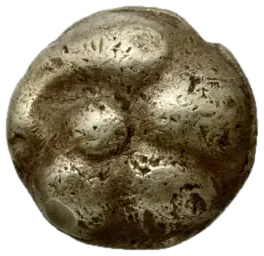
Under the temple of Artemis at Ephesus, excavators found about a hundred early electrum coins, the oldest coins ever found in a dig.
The British archaeologist David Hogarth dug there in 1904–05 and found about 95; Austrian excavators found more later. They include Lydian lion heads and the coin naming Phanes. Since they were re-examined in 1951, the date of the deposit, and so of the first coins, has moved between the first half of the 7th and the first half of the 6th century BC. A recent study of the pottery found with them, by the Austrian archaeologist Michael Kerschner, points to about 600 BC.
Bibliothèque nationale de France · CC BY 4.0
Source: Kerschner and Konuk on the Artemision coins and their context (2020), open access ↗
Sources
- Robinson, 'The coins from the Ephesian Artemision reconsidered', Journal of Hellenic Studies 71 (1951)
- Kerschner and Konuk, in White Gold: Studies in Early Electrum Coinage (2020)
Sardis: coins in a burned city
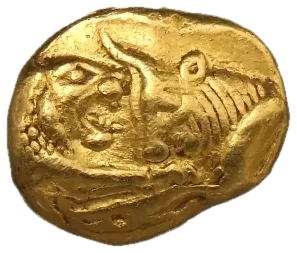
When the Persian king Cyrus took Sardis, Croesus's capital, about 547 BC, the city burned. Coins sealed under that destruction must be older.
In 2005 the archaeologist Nicholas Cahill and the numismatist John Kroll published croeseids, the first coins of pure gold and pure silver, found under a floor sealed by the destruction. So they were struck under Croesus, not by the Persians after him, as some had argued. In 2025 a new find added nine silver croeseids lying with their owner's bones in the destruction layer. They are well worn, which fits Croesus starting to strike them early in a reign that may have begun in the 580s rather than 561 BC.
Münzkabinett, Staatliche Museen zu Berlin · CC BY-SA 4.0
Source: Cahill et al., 'A new find of Croeseid coins from Sardis', Hesperia 94 (2025) ↗
Sources
- Cahill and Kroll, 'New Archaic coin finds at Sardis', American Journal of Archaeology 109 (2005)
Morgantina: Pliny's date was wrong
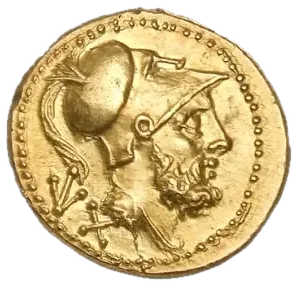
Pliny the Elder wrote that Rome first struck silver in 269 BC. A burned house in Sicily showed that the denarius, Rome's main silver coin, came much later.
Pliny the Elder (AD 23/24–79) was a Roman officer whose Natural History gathers what Romans knew about the world. At Morgantina, which Rome sacked in 211 BC in the war with Hannibal, the American numismatist Theodore Buttrey found a denarius under a burned, fallen roof tile. With other finds, this put the denarius's birth in the crisis of about 212–211 BC. Pliny's 269 BC probably refers to Rome's earlier silver didrachms. He also says the first gold came 62 years after the first silver, about 207 BC, close to the date of Rome's first gold, marked 60, 40 and 20 asses.
Münzkabinett, Staatliche Museen zu Berlin · CC BY-SA 4.0
Sources
- Buttrey, Morgantina Studies II: The Coins (1989)
- Crawford, Roman Republican Coinage (1974)
Frozen moments
Pompeii: purses from one day
When Vesuvius buried Pompeii and Herculaneum in AD 79, people died carrying their money. Their purses show which coins were in use on one day.
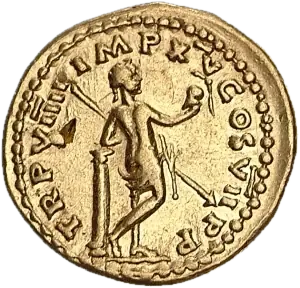
One coin has even been used to date the eruption. A coin of Titus found in 1974 in the House of the Golden Bracelet was read as naming his 15th acclamation as imperator (IMP XV), a title thought to date from September 79 or later, which would rule out the traditional date of 24 August. In 2013 the British Museum curator Richard Abdy re-read it as the 14th, so the coin no longer decides it. A charcoal inscription found in Pompeii in 2018 points to October. Pliny the Elder died in the eruption, trying to rescue people by ship.
Münzkabinett, Staatliche Museen zu Berlin · CC BY-SA 4.0
Sources
- Abdy, 'The last coin in Pompeii: a re-evaluation of the coin hoard from the House of the Golden Bracelet', Numismatic Chronicle 173 (2013)
Childeric's grave: a king who named himself
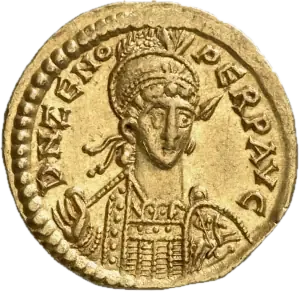
In 1653 a mason at Tournai, in today's Belgium, found the grave of Childeric, king of the Franks, who died in 481 or 482. His gold seal ring, inscribed CHILDIRICI REGIS, 'of King Childeric', named him.
With him were about a hundred gold solidi, the newest of the emperor Zeno (474–491): a date that fits the king's death. The physician Jean-Jacques Chifflet published drawings of the treasure in 1655. It later passed to Louis XIV's royal library in Paris, where thieves stole it on the night of 5–6 November 1831 and melted most of it; only a few pieces were fished out of the Seine. The same logic dates the ship burial at Sutton Hoo in Suffolk: its 37 gold coins from Frankish mints point to the 620s.
Münzkabinett, Staatliche Museen zu Berlin · CC BY-SA 4.0
Sources
- Chifflet, Anastasis Childerici I (Antwerp, 1655)
- Kent, 'The coins and the date of the burial', in Bruce-Mitford, The Sutton Hoo Ship-Burial I (1975)
What ancient writers said
Who invented coins? The writers disagree
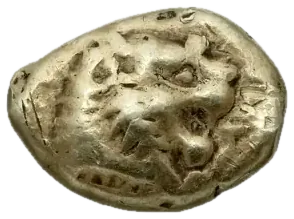
The Greek historian Herodotus says the Lydians were the first to strike coins of gold and silver. Later writers named other inventors.
Herodotus (c. 484–425 BC), from Halicarnassus, wrote the history of the wars between the Greeks and Persia and travelled widely to gather it. Six centuries later Julius Pollux, a scholar who taught in Athens, listed rival claims in his word book, the Onomasticon: Pheidon of Argos, Demodike of Kyme (wife of the Phrygian king Midas), the Athenians Erichthonios and Lykos, the people of Naxos, and the Lydians, as the poet Xenophanes said. The finds side with Lydia and the Ionian Greeks: the oldest coins come from western Turkey.
Bibliothèque nationale de France · CC BY 4.0
Source: Herodotus, Histories 1.94 ('the first men whom we know who coined and used gold and silver currency') ↗ · Pollux, Onomasticon 9.83 (Greek text, Bekker's edition of 1846) ↗
Sources
- Herodotus, Histories 1.94 ('the first men whom we know who coined and used gold and silver currency')
- Pollux, Onomasticon 9.83 (Greek text, Bekker's edition of 1846)
The daric: what the palace foundations say
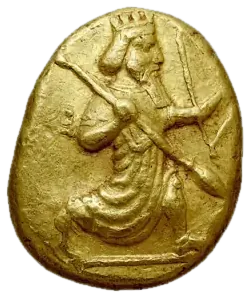
Herodotus says Darius I of Persia refined gold to the highest purity for his coins. Yet the coins buried under his palace at Persepolis were Lydian gold, not darics.
In 1933 excavators found two stone boxes under the corners of the Apadana, Darius's great audience hall, each holding a gold and a silver plate recording its foundation. Beneath the boxes lay eight light gold croeseids and Greek and Cypriot silver coins, but no darics and no Persian silver. If the deposit was laid about 515 BC, the daric probably came after that, around 500 BC. Herodotus also tells how Aryandes, Darius's governor of Egypt, struck silver as pure as the king's gold, and Darius had him killed.
Bibliothèque nationale de France, via Wikimedia Commons · Public domain
Source: Herodotus, Histories 4.166 (Darius's pure gold, and the fate of Aryandes) ↗
Sources
- Herodotus, Histories 4.166 (Darius's pure gold, and the fate of Aryandes)
Athens' emergency gold, dated by a comedy
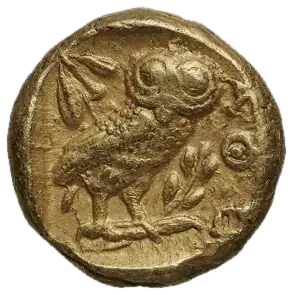
Near the end of its long war with Sparta, Athens melted gold statues of Victory from the Acropolis into coins. A comedy staged in 405 BC mentions 'the new gold'.
Aristophanes (c. 446–386 BC) was Athens's great comic playwright. In Frogs the chorus says the city treats its best citizens as it treats 'the old coinage and the new gold currency': the finest coins of all, yet nobody spends them, using base bronze coins 'minted just yesterday' instead. An ancient note written beside that line quotes the Athenian historians Hellanikos and Philochoros: the gold was struck the year before, 407/6 BC, from the golden Victories. That fixes Athens's gold owls to within a year or two.
Bibliothèque nationale de France · CC BY 4.0
Source: Aristophanes, Frogs 718–737 ('the old coinage and the new gold currency') ↗
Sources
- Thompson, 'The golden Nikai reconsidered', Hesperia 13 (1944)
Written in stone and on papyrus
Treasure lists carved in stone
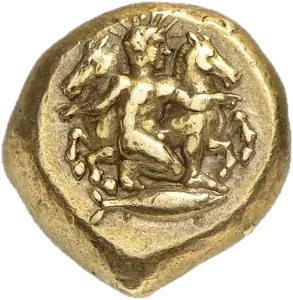
Athens carved its public accounts on stone. The accounts for building the Parthenon carry 'gold staters' of Lampsakos and of Kyzikos from one year to the next.
The Greeks called electrum 'gold', and these two cities on the straits to the Black Sea struck the electrum staters that traders trusted most. A coin named in a dated inscription was already in use by that year. The treasurers of Athena also listed, year by year, everything the goddess owned, from silver bowls to golden statues of Victory. The American archaeologist Dorothy Burr Thompson pieced together the story of those statues, and of the gold coins made from them, in 1944.
Münzkabinett, Staatliche Museen zu Berlin · Public Domain Mark 1.0
Source: Parthenon building accounts, 434/3 BC (IG I³ 449), translated on Attic Inscriptions Online ↗ · Thompson, 'The golden Nikai reconsidered', Hesperia 13 (1944) ↗
Sources
- Parthenon building accounts, 434/3 BC (IG I³ 449), translated on Attic Inscriptions Online
- Thompson, 'The golden Nikai reconsidered', Hesperia 13 (1944)
A mint letter from Egypt
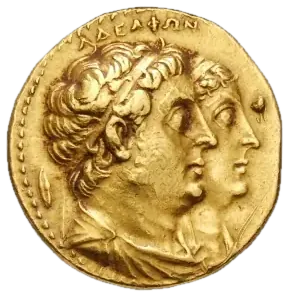
Among the papers of Zenon, an estate manager in Ptolemaic Egypt, is a letter from Demetrios, probably head of the Alexandria mint, written in October 258 BC.
Under a royal order, foreign gold was being brought in to be struck again as new Ptolemaic coins, and Demetrios writes to the king's finance minister Apollonios about how the work was going. He also reports that shopkeepers were refusing worn old gold, and asks for someone to be appointed to judge it. Letters like this show when and why coins were recalled and restruck, which no coin can tell us.
Münzkabinett, Staatliche Museen zu Berlin · CC BY-SA 4.0
Source: The letter itself: P.Cair.Zen. I 59021 (Greek text and details on papyri.info) ↗
Sources
- Panagopoulou, on P.Cair.Zen. I 59021, Zeitschrift für Papyrologie und Epigraphik 197 (2016)
Where coins turn up
Near home: finds point to the mint
Most coins were lost not far from where they were made. For coins that name no city, where they are found points to their home.
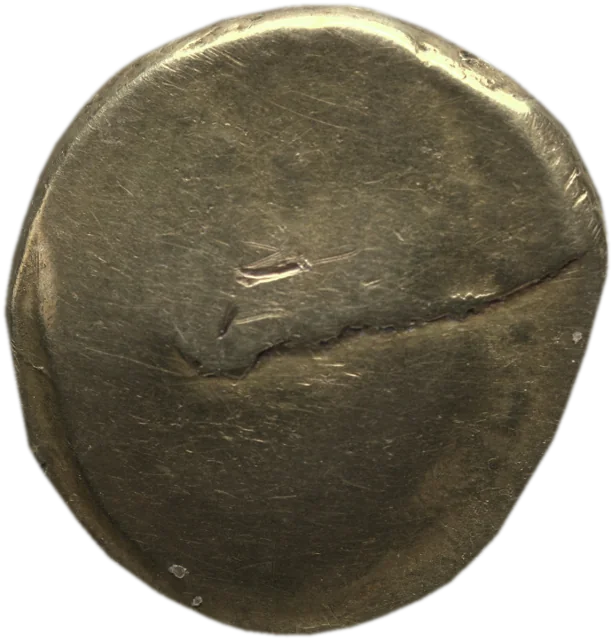
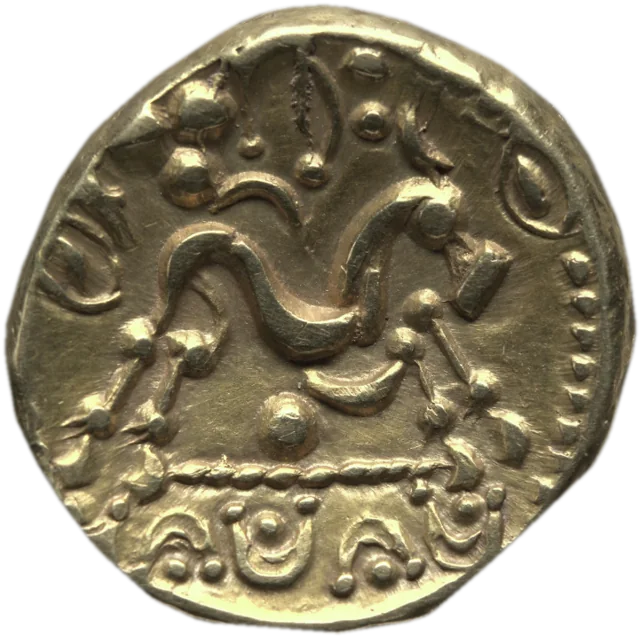
Britain's Iron Age gold staters, copied over generations from Philip II's, carry no city name. Maps of where each type turns up sort them into regions and peoples, and many of those finds come from the public: in England and Wales the Portable Antiquities Scheme has recorded detector finds online since 1997. Museums publish their coins online too. On the map, a mint's 'Specimens in museums' figure adds up the museum examples we found online for its gold designs: coins that survive, not how many were made.
The Cleveland Museum of Art · CC0
The Cleveland Museum of Art · CC0
Source: Portable Antiquities Scheme, the record of finds by the public in England and Wales ↗
Sources
- Portable Antiquities Scheme, the record of finds by the public in England and Wales
Roman gold in India
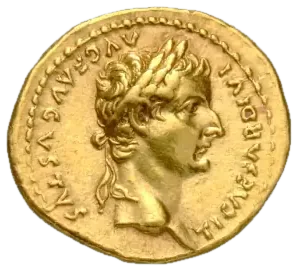
Hoards of Roman gold and silver have been found in south India, most of them coins of the 1st century AD. They date the peak of Rome's sea trade with India.
Pliny the Elder complained that India, China and Arabia took 100 million sesterces a year from the empire in exchange for luxuries. The finds agree with him on timing: Roman ships sailed to India with the monsoon winds, and the coins peak in the 1st century AD. Many aurei found in India are slashed across the face, perhaps to test that they were solid gold or to take them out of use as money, as in the hoard found at Pudukkottai in 1898.
Münzkabinett, Staatliche Museen zu Berlin · CC BY-SA 4.0
Sources
- Turner, Roman Coins from India (1989)
Byzantine gold in Chinese tombs
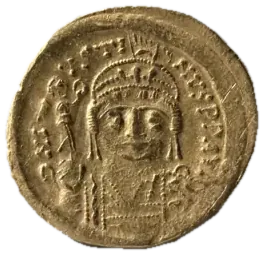
Byzantine solidi and local copies have been found in Chinese tombs, some placed in the mouth of the dead. The first, a solidus of Justin II, came from a Sui-dynasty tomb (581–618) in 1953.
Here the dating runs both ways. Many of these tombs have a dated epitaph, which shows the coin was in China by that year. The coins in turn show what reached the Silk Road: a 2017 count lists 42 genuine solidi and 103 imitations, many very thin. Some tombs, at Guyuan in north-west China, belong to Sogdian families, the merchants who carried much of the Silk Road trade.
The Cleveland Museum of Art · CC0
Sources
- Thierry and Morrisson, 'Sur les monnaies byzantines trouvées en Chine', Revue numismatique (1994)
- Guo Yunyan, count of Byzantine coins and imitations found in China (2017)
Clues on the coin itself
Alexander's gold, struck after Alexander
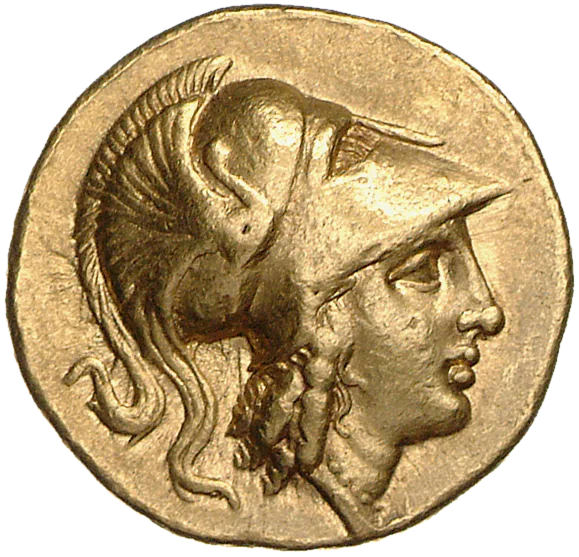
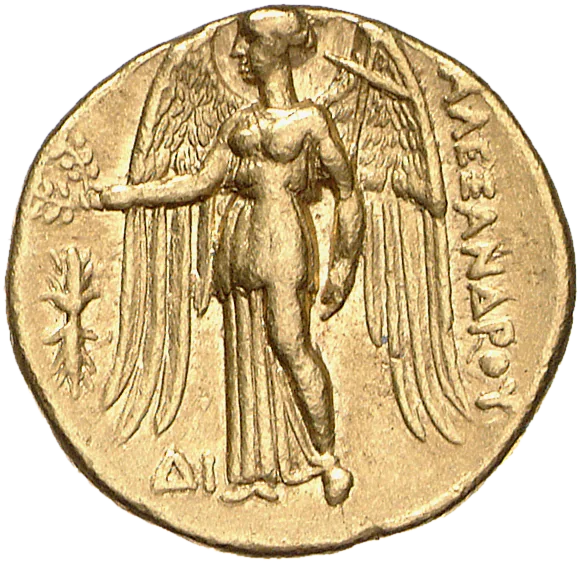
Alexander's gold staters went on being struck for a century and more after he died in 323 BC, in his name and with his designs. Telling lifetime coins from later ones takes small marks, hoards and die links.
The British Museum scholar Martin Price catalogued the coins in Alexander's name in 1991, giving each issue a mint and a date from its small symbols and monograms and from the hoards it turns up in. Some later issues add his title, King, or carry the name of his half-brother Philip III. Cities on the Black Sea struck his design until about 175 BC. Collectors care, because lifetime coins are usually worth more.
Münzkabinett, Staatliche Museen zu Berlin · Public Domain Mark 1.0
Münzkabinett, Staatliche Museen zu Berlin · Public Domain Mark 1.0
Sources
- Price, The Coinage in the Name of Alexander the Great and Philip Arrhidaeus (1991)
The beard clock
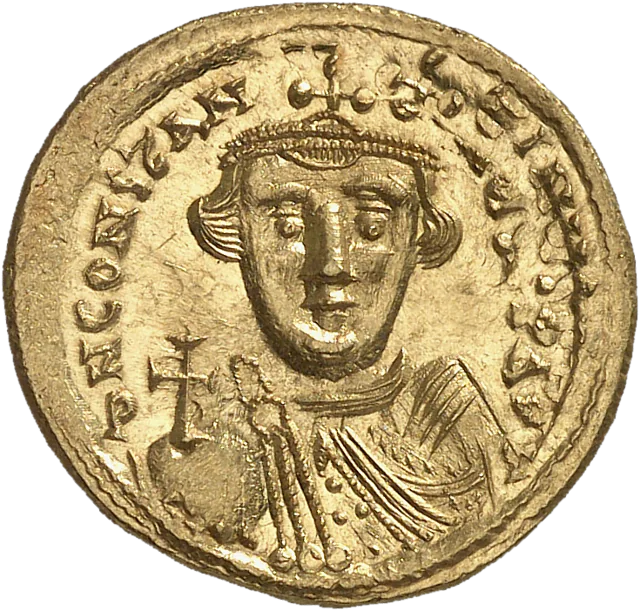
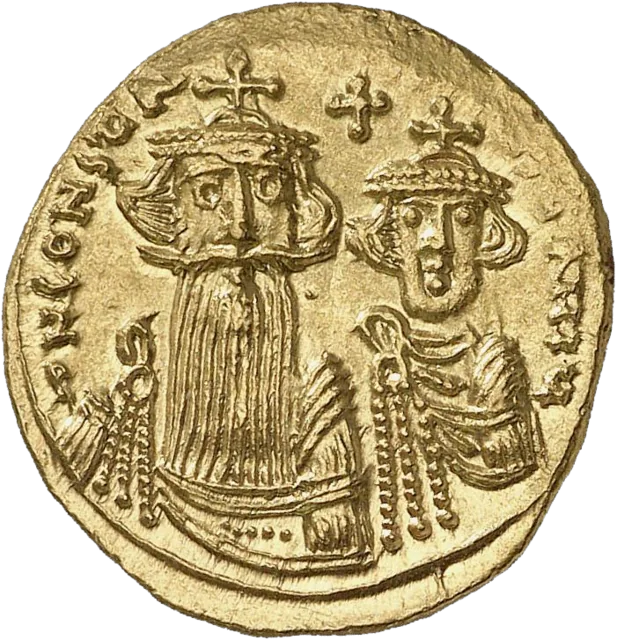
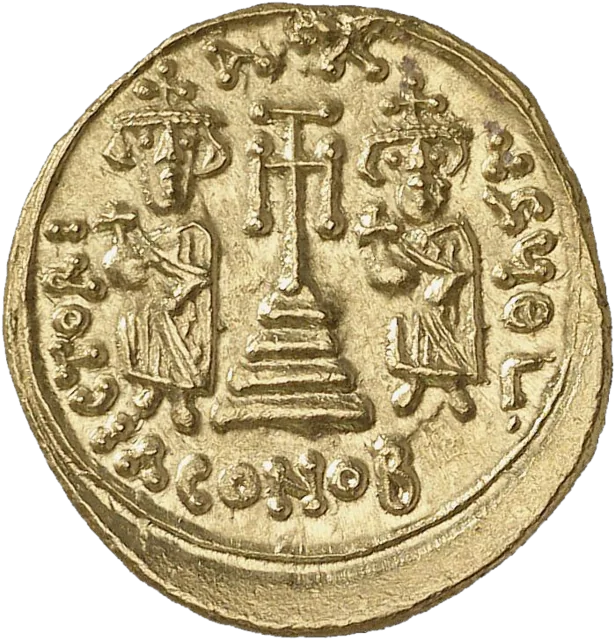
Constans II became emperor at about eleven. His gold shows a beardless boy, then a man with a long beard, then adds his sons, so each type dates to within a few years.
His eldest son Constantine IV joins him on the front from 654. From 659 the back shows his younger sons Heraclius and Tiberius beside the cross, 'to assure the succession', as the Byzantine coin expert Philip Grierson puts it. Constans is a boy on his earliest coins and goes on, in Grierson's words, to 'acquire enormous beards and mustaches'. Titles that give a year are in Reading a coin; die links and coins struck over older coins are in How coins were made.
Münzkabinett, Staatliche Museen zu Berlin · Public Domain Mark 1.0
Münzkabinett, Staatliche Museen zu Berlin · Public Domain Mark 1.0
Münzkabinett, Staatliche Museen zu Berlin · Public Domain Mark 1.0
Source: Grierson, Byzantine Coinage (Dumbarton Oaks, 1999), free to read ↗
Sources
- Grierson, Byzantine Coinage (Dumbarton Oaks, 1999), free to read
No emperor: the moneyer's name
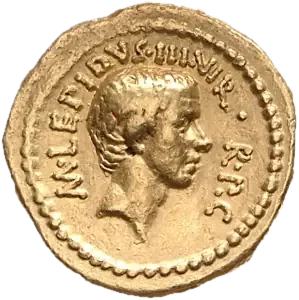
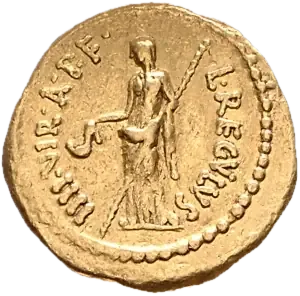
Coins of the Roman Republic show no ruler until Caesar in 44 BC. From the 2nd century BC they name a moneyer instead, one of three young men chosen each year to run the mint, and each design was struck for that one year only.
A name rarely gives the year by itself, because many moneyers are otherwise unknown, so the order of the issues comes from hoards (see 'Hundreds of hoards make a timeline'). A name helps most when the man had a later career. Lepidus, who ruled Rome with Antony and Octavian from 43 BC, started out as a moneyer, and older catalogues put his coins anywhere from 66 to 60 BC. Crawford chose 62 BC, which fits the order of the issues, Lepidus's age (he was consul in 46) and his coin's word CONCORDIA, an echo of Cicero's call for harmony in 63. Crawford's catalogue is still the standard, but its dates are, in the words of the hoard specialist Kris Lockyear of University College London, 'much disputed', and other scholars have proposed different orders for parts of the series.
Münzkabinett, Staatliche Museen zu Berlin · CC BY-SA 4.0
Münzkabinett, Staatliche Museen zu Berlin · CC BY-SA 4.0
Source: Lockyear, 'Simulation, seriation and the dating of Roman Republican coins', Journal of Computer Applications in Archaeology 5 (2022), free to read ↗ · Burden-Strevens, 'Acting up: the post of master of the mint as an early-career move in the late Republic' (Brill, 2022), free to read ↗ · Coinage of the Roman Republic Online (American Numismatic Society): RRC 494/1 ↗
Sources
- Crawford, Roman Republican Coinage (1974), nos. 415/1 (Lepidus as moneyer) and 494/1
The lab
Gold purity as a clock
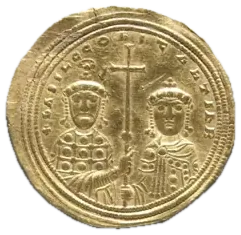
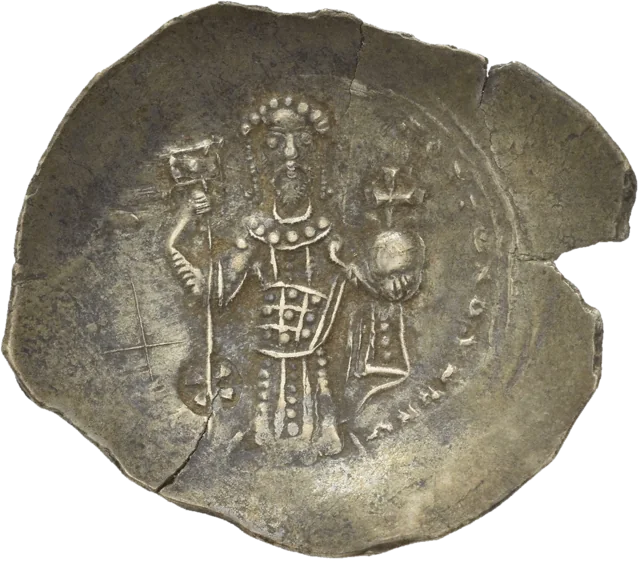
For seven centuries the solidus was pure gold. Then it lost its gold so fast that a measured coin can be placed within a reign or two.
Philip Grierson tells it: Michael IV (1034–41), 'who had been a money-changer in early life and who was believed to have dabbled in counterfeiting', debased some of his coins. In the ten years after the defeat at Manzikert in 1071 the coin fell to about 8 carats, a third gold, and in the 1080s, when Alexios I melted imperial plate to pay his troops, to 'virtually nothing'. His reform of 1092 brought back a coin of 20½ carats, the hyperpyron, 'super-refined'. Metal is usually measured with X-rays (XRF), which read only the surface, so a worn or cleaned coin can look richer than its core.
The Cleveland Museum of Art · CC0
Münzkabinett, Staatliche Museen zu Berlin · Public Domain Mark 1.0
Source: Grierson, Byzantine Coinage (1999), pp. 10–11 on the debasement ↗
Sources
- Morrisson, Brenot, Callu and others, L'or monnayé I (1985)
Where the gold came from
Gold carries traces of other metals from its mine or river. Matching a coin's traces to a source can show where its gold was found, and when a new source came into use.
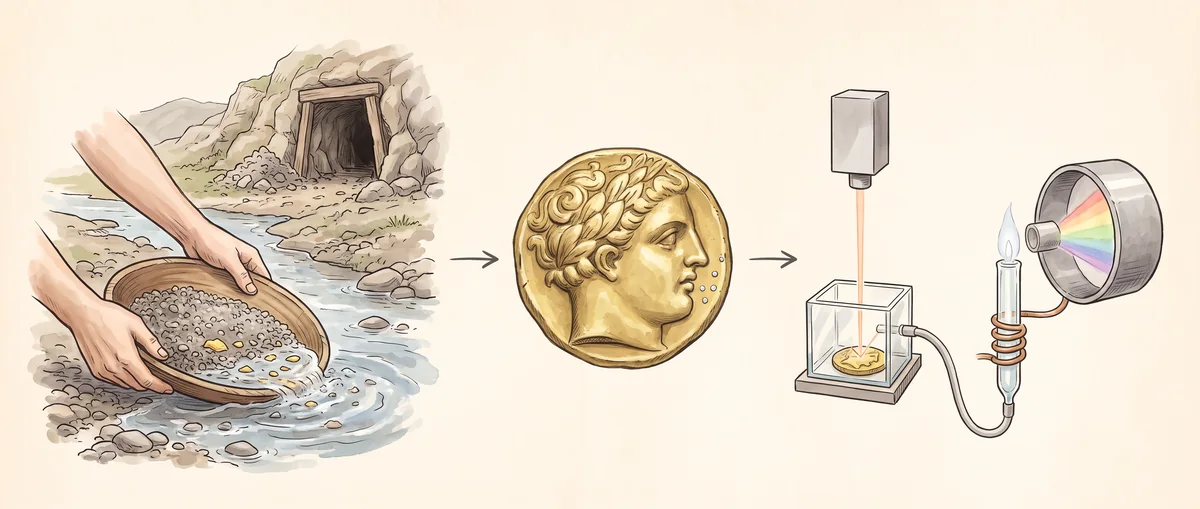
Illustration made for this lesson.
The method is young and many matches are uncertain, because gold was melted down and mixed again and again. The Story 'Where the gold came from' follows the main sources on the map, from the river at Sardis to the mines of Macedonia, Nubia and Spain.
Sources
- Guerra and Calligaro, 'Gold traces to trace gold', Journal of Archaeological Science 31 (2004)
Still argued over
When was Syracuse's gold struck?
Syracuse's gold 100 and 50 litrai are among the most admired Greek gold coins, and their date is still argued.
In a die study of 1993 the numismatist Denyse Bérend linked 282 coins of the 100 litrai to 26 front and 23 back dies, and tied the issue to the years about 406–404 BC, when Carthage's armies overran Sicily and Dionysios I took power. Others read the hoards differently: the Berlin coin cabinet, after Christof Boehringer, sees a regular issue running to about 380 BC, and some sale catalogues say 400–370 BC. Our catalogue card gives 405–400 BC.
Bibliothèque nationale de France · CC BY 4.0
Sources
- Bérend, 'Le monnayage d'or de Syracuse sous Denys I', in La monetazione dell'età dionigiana (Rome, 1993)
- Boehringer, in Greek Numismatics and Archaeology: Essays in Honor of Margaret Thompson (1979)
When did Philip II start striking gold?
Older books say Philip II began his gold staters soon after he took the mines near Krenides in 356 BC. The French numismatist Georges Le Rider argued for about 345 BC.
The Greek historian Diodorus of Sicily (1st century BC) says the mines gave Philip more than 1,000 talents a year and that his gold coins were 'known from his name as Philippeioi'. That says how rich the mines were, not when the coins began. Le Rider's die study of the Pella mint (1977) put the first group about 345/342–336 BC, and staters with Philip's name went on being struck after his death until about 310 BC. Our catalogue card follows him: 345–310 BC.
Source: Diodorus of Sicily, Library of History 16.8.6–7 (the mines and the Philippeioi) ↗
Sources
- Le Rider, Le monnayage d'argent et d'or de Philippe II frappé en Macédoine de 359 à 294 (1977)
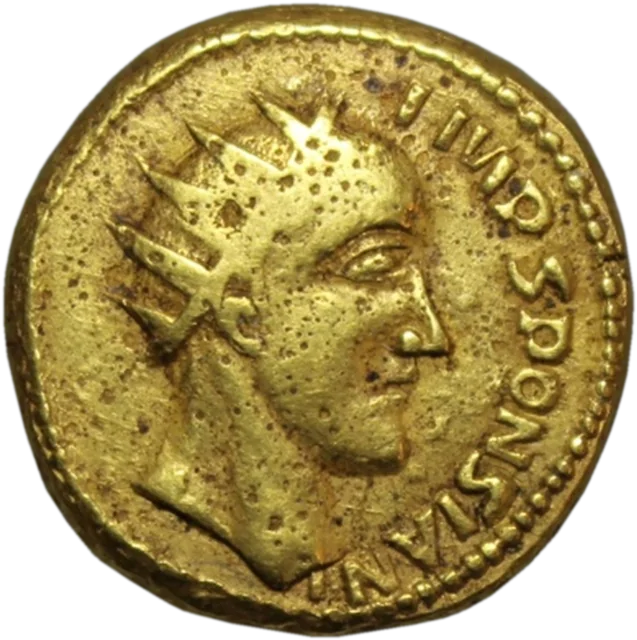
Sponsian: two dates 1,500 years apart
Gold coins naming an emperor called Sponsian, found in Transylvania in 1713, were called fakes for 150 years. In 2022 a team argued they are genuine.
So one coin has two possible dates: about AD 260, if Sponsian was a real commander cut off in Roman Dacia, or the 18th century or earlier, if a forger made it. Wear and soil deposits seen under the microscope are the new evidence; many numismatists still doubt it. The lesson Is it real? tells the story in full.
Pearson et al. 2022, PLOS ONE (The Hunterian, University of Glasgow) · CC BY 4.0
Source: Pearson et al., 'Authenticating coins of the Roman emperor Sponsian', PLOS ONE (2022), open access ↗
Sources
- Pearson et al., 'Authenticating coins of the Roman emperor Sponsian', PLOS ONE (2022), open access