 Gold Coin Catalogue
How to read a coin's grade
VF, aEF, Ch AU 5/5 4/5: what the grade words and the slab labels mean, how the systems line up, why two experts can grade one coin differently, and what a grade never tells you.
The words
Fine to FDC
A grade measures wear: how much of the design has rubbed away since the coin left the mint. The European scale runs Fine, Very Fine (VF), Extremely Fine (EF), then FDC.
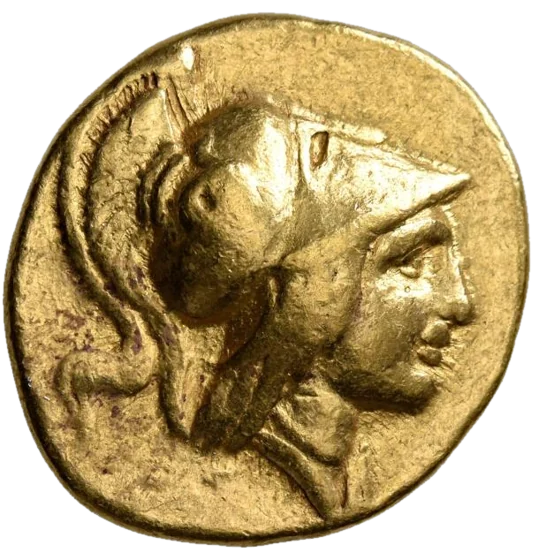
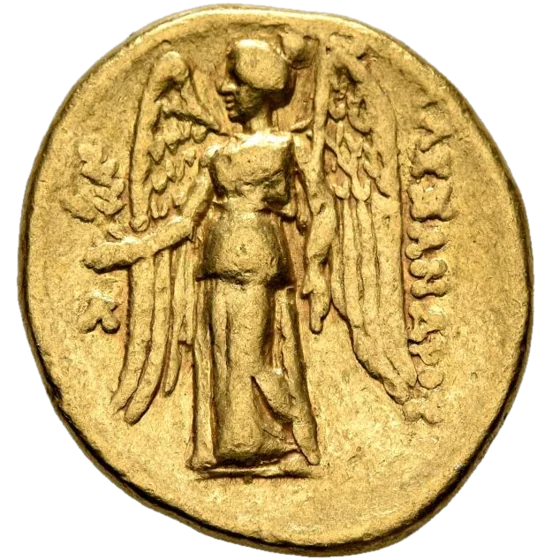
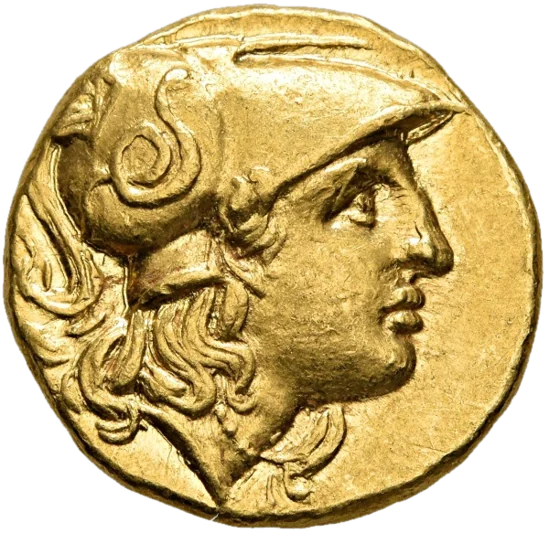
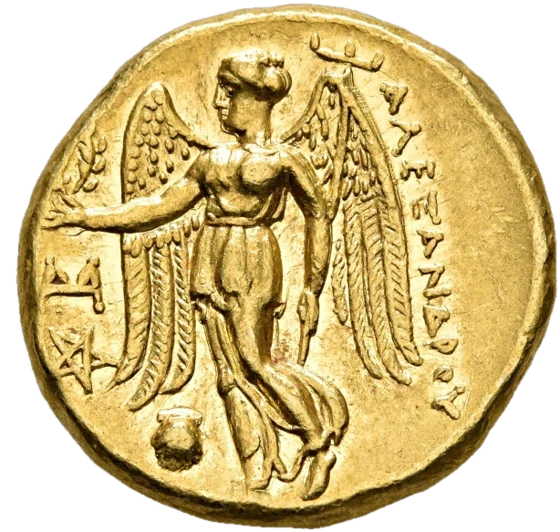
Wear starts on the high points: hair, a helmet crest, a cheekbone, wing tips.
- Fine (F): the whole design in outline, its details gone.
- Very fine (VF): most detail kept, high points worn.
- Extremely fine (EF; Americans write XF): only light rubbing on the highest points.
- FDC (fleur de coin, 'flower of the die'): as struck, no wear at all.
- Very good and Good: below Fine, worn nearly flat.
A grade says nothing about how well the coin was struck, how it was kept or how beautiful it is. The cards below come back to that.
Two gold staters of Alexander the Great (Athena / Nike), sold by the same Swiss auction house.
Source: Leu Numismatik, Web Auction 33 (2025), lot 19: Alexander III stater, Arados, "Good fine" ↗ · Leu Numismatik, Web Auction 25 (2023), lot 354: Alexander III stater, "Lustrous and fresh. Good extremely fine" ↗ · Wikipedia, Coin grading: the European grading table ↗
Sources
- Leu Numismatik lot descriptions
- Wikipedia, Coin grading
- The basics card 'Grade words' in Reading a coin
Good, about, nearly
Between the main grades sit the small words. They move a grade half a step, and one of them, 'Good', is a trap.
- VF+ or good VF (gVF)
- Better than VF, not yet EF. In Leu and NAC catalogues "good" always pushes a grade up.
- nearly EF (nEF), about EF (aEF)
- Just short of EF. Both mean the same small step down.
- VF/EF
- A split grade: obverse first, reverse second. Here the front is VF and the back EF.
- Good (G), Very Good (VG)
- Low grades. On their own, "Good" and "Very Good" describe a coin worn almost flat.
- "…, otherwise extremely fine"
- The faults come first, then the grade the coin would have without them. Read the faults: they are the part that changes the price.
- 'Good very fine' (gVF): a little better than VF.
- 'About' or 'nearly' extremely fine (aEF, nEF): just below EF.
- VF/EF: a split grade, obverse (front) first, reverse (back) second; one side often wears faster.
- 'Good' on its own: one of the lowest grades. A 'Very Good' coin is not very good at all.
- 'Minor marks, otherwise extremely fine': faults come first, so this is an EF coin with marks.
Source: Fleur-de-Coin, Coin grades: grading standards by country, split grades ↗ · PCGS, How United States coins are graded ↗
Sources
- Fleur-de-Coin, Coin grades
- PCGS, How United States coins are graded (split grades)
One grade, eight ways to say it
Every country has its own words for the same grades. Lined up side by side they form one ladder, from worn flat at the bottom to as struck at the top.
| Grade | Example | NGC Ancients | US number | English | Design left | German | French | Italian | Spanish |
|---|---|---|---|---|---|---|---|---|---|
| As struck | 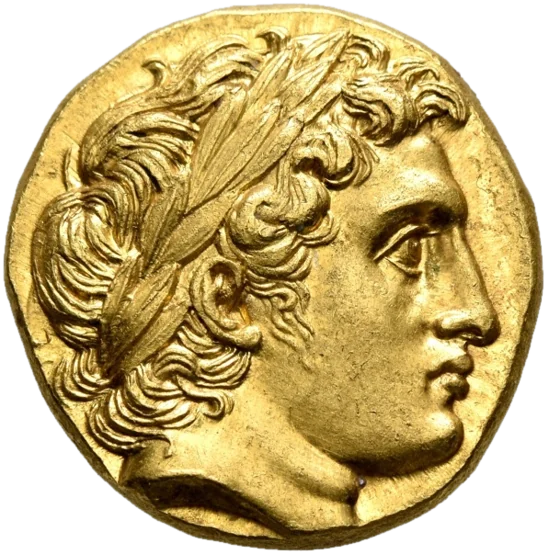 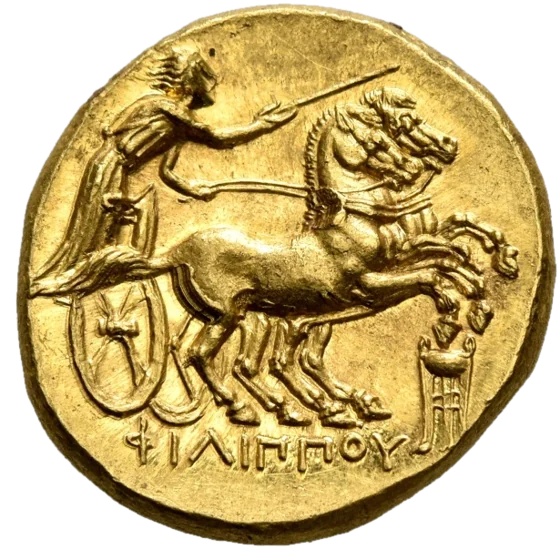 Philip II stater "virtually as struck" | Ch MS · Gem MS | MS 65–70 | FDC | all, full lustre | stglStempelglanz | FDCfleur de coin | FDCfior di conio | FDC |
| Mint state | 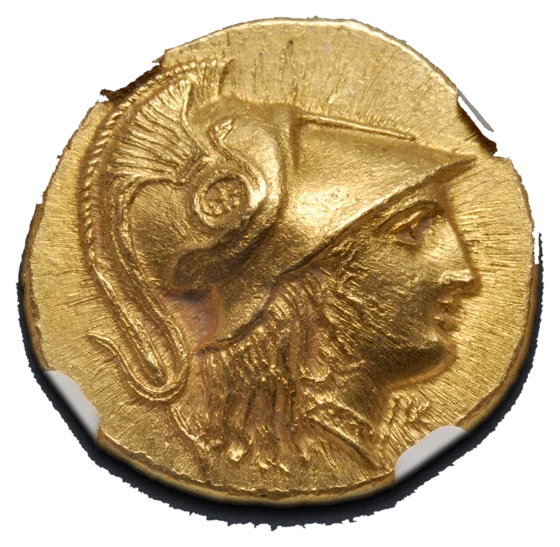 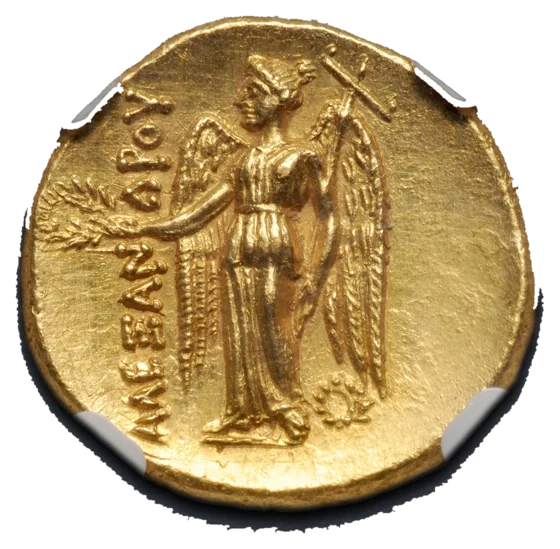 Alexander stater "NGC MS" | MS | MS 60–64 | Unc · BU | all, some lustre | unzunzirkuliert | SPLsplendide | SPL / FDC | SCsin circular |
| About mint state | Alexander stater "good extremely fine" | AU · Ch AU | AU 50–58 | EF / Unc | 95%, a little lustre | fast unz | —not used | MSPLmolto splendido | EBC+ |
| Extremely fine | 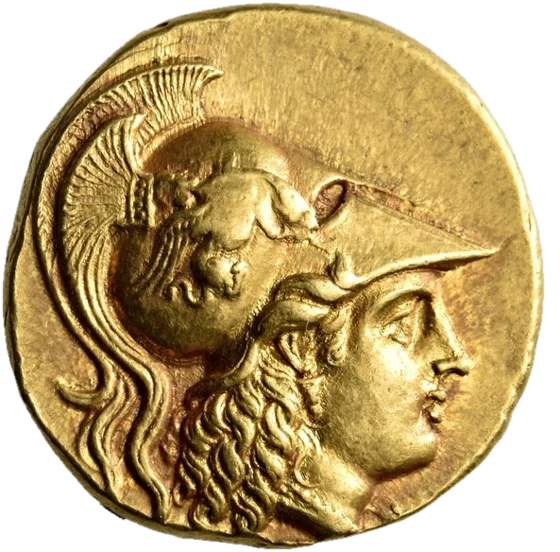 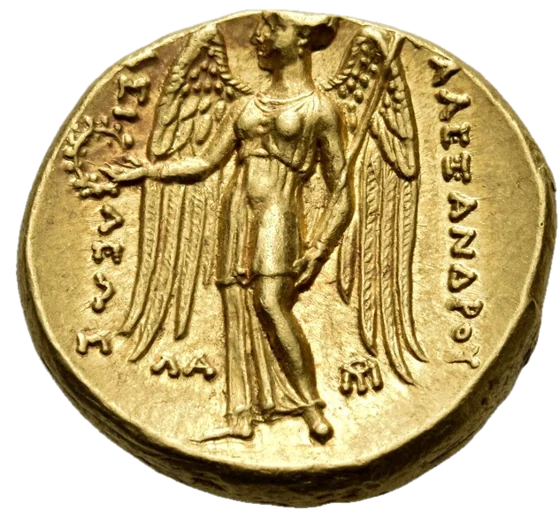 Alexander stater "extremely fine" | XF · Ch XF | XF 40–45 | EF | 90% | vzvorzüglich | SUPsuperbe | SPLsplendido | EBC |
| Very fine | 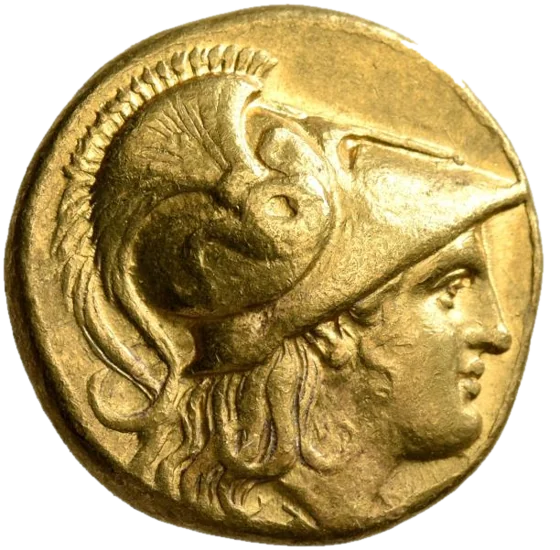 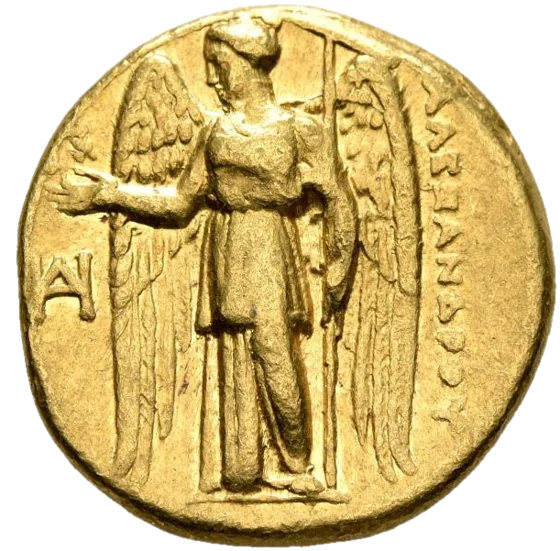 Alexander stater "very fine" | VF · Ch VF | VF 20–35 | VF | 75% | sssehr schön | TTBtrès très beau | BBbellissimo | MBC |
| Fine | Alexander stater "good fine" | F · Ch F | F 12–15 | F | 50% | sschön | TBtrès beau | MBmolto bello | BC+ |
| Very good | 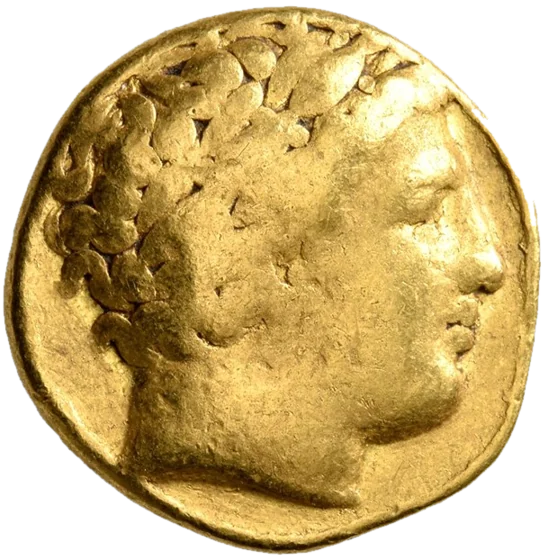 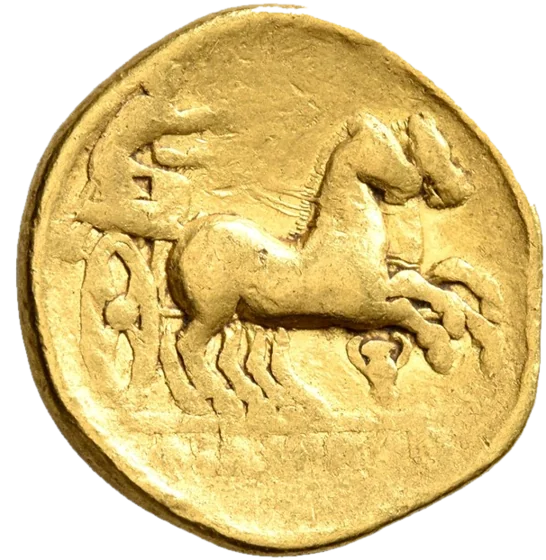 Philip II stater "nearly fine" | VG | VG 8–10 | VG | 25% | sgesehr gut erhalten | Bbeau | Bbello | BC |
| Good | Gold this worn rarely reaches a good sale | G | G 4–6 | G | 10% | gegut erhalten | ABassez beau | Mmediocre | RC |
- Example: the auction house's grade (Leu Numismatik, Nomos AG, Classical Numismatic Group); tap a coin to open its sale. Mostly staters of Alexander the Great, so the wear can be compared.
- NGC Ancients: words, not numbers; 'Choice' (Ch) marks the better coins of a grade.
- US number: the Sheldon scale, 1 to 70, first made for US large cents.
- English: what Leu, NAC and Nomos write in their catalogues.
- Design left: a rule of thumb, not a standard.
- German, French, Italian, Spanish: the short forms in each country's auction catalogues.
- Published tables differ by half a step near the top. On a phone, scroll the table sideways.
The rungs line up only roughly. Coins graded twice show NGC's words running about one rung above Europe's: see 'One coin, two verdicts'.
Source: Wikipedia, Coin grading: the European grading table ↗ · Fleur-de-Coin, Coin grades: grading standards by country, split grades ↗ · NGC Ancients: how NGC grades ancient coins (grade, strike, surface, style) ↗ · Leu Numismatik, Web Auction 28 (2023), lot 16: Philip II stater, "virtually as struck" ↗ · Classical Numismatic Group, Feature Auction 124 (2023), lot 102: Alexander stater, "NGC MS" ↗ · Leu Numismatik, Web Auction 25 (2023), lot 354: Alexander stater, "good extremely fine" ↗ · Nomos AG, Auction 38 (2026), lot 233: Alexander stater, "extremely fine" ↗ · Leu Numismatik, Web Auction 34 (2025), lot 316: Alexander stater, "very fine" ↗ · Leu Numismatik, Web Auction 33 (2025), lot 19: Alexander stater, "good fine" ↗ · Leu Numismatik, Web Auction 7 (2019), lot 121: Philip II stater, "nearly fine" ↗
Sources
- Wikipedia, Coin grading (European grading table)
- Fleur-de-Coin, Coin grades
- NGC Ancients grading page
- Leu Numismatik and Nomos lot descriptions (the example coins, and coins graded by both)
The slab
Who grades: NGC, PCGS and the rest
In America most valuable coins are sent to a grading company, which checks that the coin is genuine, grades it and seals it in a slab, a clear plastic case with a numbered label.
| Who | Since | Ancient coins | How it grades them |
|---|---|---|---|
| NGCSarasota, Florida | 1987 | NGC Ancients since 2008: the usual slab for Greek, Roman and Byzantine coins | Words, not numbers (Ch AU), plus strike and surface out of 5 |
| PCGSCalifornia | 1986 | Chinese cash coins from August 2025 (Shanghai); the Tyrant collection of Byzantine gold in 2026 | A new 10-point scale for the Chinese coins; the US 1–70 numbers on the Byzantine gold (a solidus of Mezezius: MS66) |
| ANACSUSA | 1972 | Accepts ancients; the oldest of the three | Began as the American Numismatic Association's fake-checking service; grading from 1979 |
| The auction houseEurope | — | Most Greek and Roman gold, sold raw | Its own experts, in its own words, with a guarantee that the coin is genuine |
NGC was started by John Albanese, who had also helped found PCGS a year earlier.
Source: Wikipedia, Numismatic Guaranty Company (founded 1987; NGC Ancients from 2008) ↗ · Wikipedia, Professional Coin Grading Service (began grading 3 February 1986) ↗ · Wikipedia, ANACS (founded June 1972; grading from March 1979) ↗ · Numismatic News: "PCGS Launches Ancient Coin Grading" (Shanghai, Qing cash coins, 10-point scale) ↗ · CoinWeek: 224 gold rarities from the Tyrant collection ("PCGS graded the coin MS66") ↗
Sources
- Wikipedia: Numismatic Guaranty Company, Professional Coin Grading Service, ANACS, Coin slab
- Numismatic News, 4 August 2025: PCGS launches ancient coin grading
- CoinWeek, 9 July 2026: the Tyrant collection's gold at the ANA show
Reading the label: Ch AU★ 5/5 4/5
An NGC Ancients label gives four verdicts: the grade, then strike and surface out of 5, and sometimes a star or 'Fine Style'.
- Ch AU
- the grade: wear only (Choice About Uncirculated)
- ★
- star: unusual eye appeal for the grade
- 5/5
- strike: how well the dies met a well-made flan
- 4/5
- surface: what happened to the coin since
- Fine Style
- dies cut by a better engraver than most of the series
What NGC writes on gold: 923 gold coins in NGC slabs sold at auction, 2015–2026
- Strike 5/5 on 76% of them, surface 5/5 on only 15%: gold is soft and picks up marks. Star on 7%.
- Brushed: cleaned with a brush, leaving fine lines.
- Ex-jewelry: once mounted in jewellery.
- Die shift: the design slipped as the coin was struck.
- Nearly all sold at Heritage; one coin can carry several notes.
NGC chose the old words over the 70-point scale for ancient coins. The strike and surface scores were devised by its ancient specialist, David Vagi.
Source: Mike Markowitz, Grading ancient coins, CoinWeek, 2 July 2018 (NGC's strike and surface scores, the star, Fine Style; smoothing and tooling) ↗ · NGC Ancients: how NGC grades ancient coins (grade, strike, surface, style) ↗
Sources
- CoinWeek, Grading ancient coins (2018)
- NGC Ancients grading page
- This site's sales records: NGC labels as printed in the lot descriptions
Strike 4, surface 1
A coin can be well made and badly treated. This aureus of Otho, emperor for three months in AD 69, was graded VF by NGC, with strike 4/5 and surface 1/5.
The portrait is crisp and well centred: a good strike. The surface tells the rest.
- Leu, which took it out of its slab: 'some marks and scratches and a scrape on the edge of the reverse, otherwise very fine'.
- Gold is soft: of 923 NGC-graded gold coins, 76% scored 5/5 for strike but only 15% for surface.
- Two coins of the same grade can sit four points apart on surface, and you will see it.
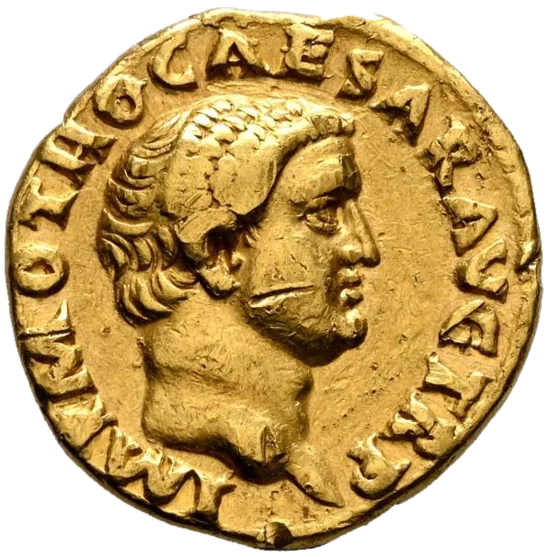
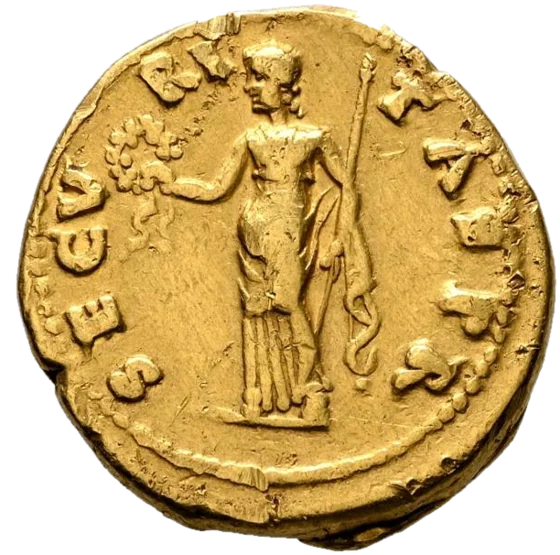
Otho, aureus, Rome, January–March AD 69 / Securitas standing, 7.33 g.
Sources
- Leu Numismatik, Web Auction 36, lot 870
Slabbed or raw?
A slab protects the coin and settles arguments over its grade. It also hides the edge, stops you weighing the coin, and catches the light badly in photos.
European houses often 'crack out' coins: take them out of the slab before the sale.
- Leu prints 'Removed from NGC encapsulation' and NGC's grade, then its own.
- This coin: NGC Ch XF with Fine Style; Leu, 'about extremely fine'.
- The certificate number can still be looked up on NGC's website.
- NGC also issues photo certificates for coins that are never slabbed.
Either way, weigh the coin against its type and look at the edge: a slab answers whether a coin is genuine, not whether it is beautiful.
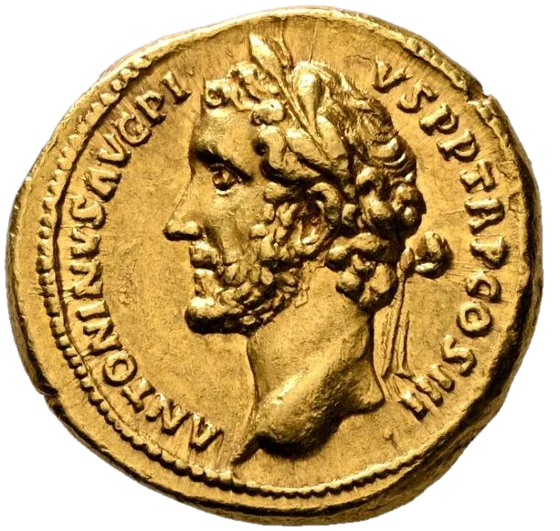
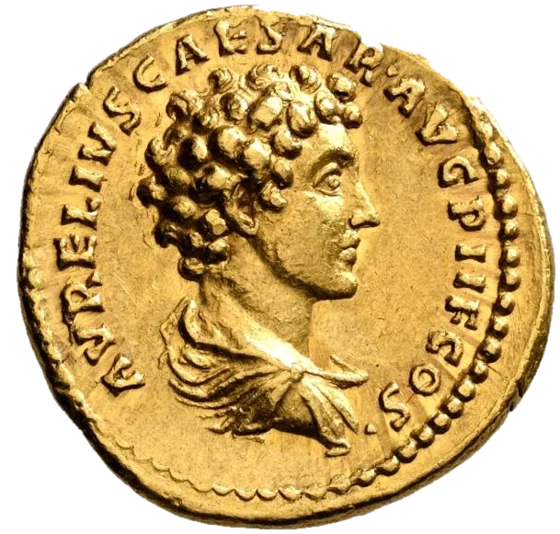
Antoninus Pius / Marcus Aurelius as Caesar, aureus, Rome, about AD 140–144.
Source: Leu Numismatik, Auction 19 (2025), lot 192: "Removed from NGC encapsulation, graded Ch XF 5/5, 4/5, fine style" ↗ · Nomos AG, Auction 32 (2024), lot 594: "with an NGC photo certificate, grading the coin MS 5/5, 4/5" ↗
Sources
- Leu Numismatik, Auction 19, lot 192
- Nomos, Auction 32, lot 594 (an NGC photo certificate)
Every house has an accent
One coin, two verdicts
When the same coin has been graded by NGC and by a Swiss auction house, you can read the two systems against each other.
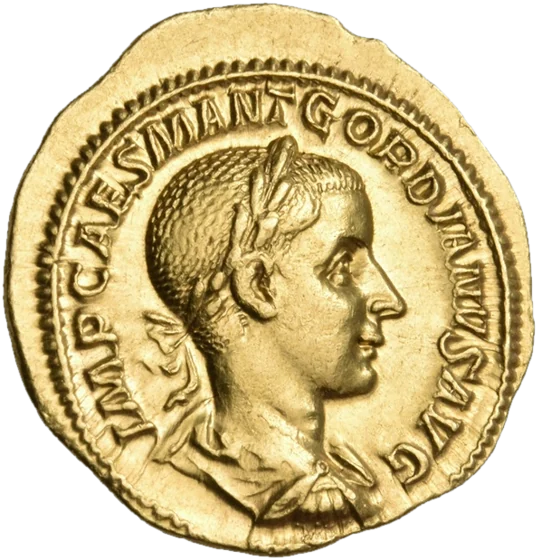
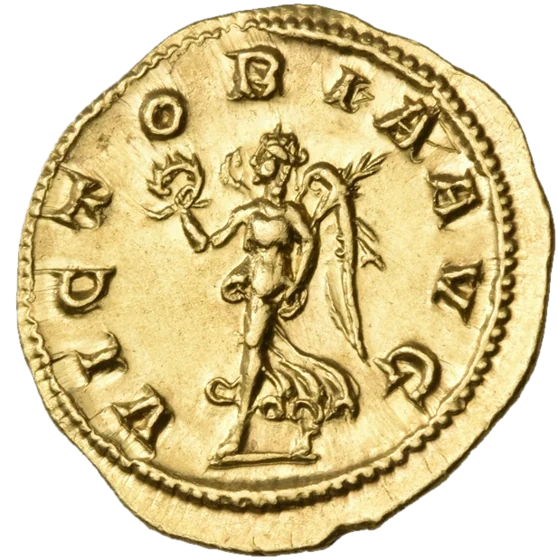
Every coin the auction houses took out of an NGC slab and graded again, in this site's records. The European words sit about one rung below NGC's letters: NGC XF is a European good VF.
Eight gold coins left an NGC slab and were resold by Leu or Nomos with both grades printed.
- The Swiss words sit about one rung lower: a European EF is often an NGC AU.
- Nomos even printed that NGC had 'slightly undergraded' this aureus of Gordian III.
Neither side is wrong. They are two dialects, and knowing both lets you compare a slabbed coin with a raw one fairly.
Sources
- Leu Numismatik and Nomos AG lot descriptions, linked in the table
"Of the finest style"
Good catalogues praise in a fixed vocabulary. Each phrase means something exact, and some of them are not about condition at all.
- "of fine style", "of the finest style"
- The engraving, not the condition: a die cut by a gifted hand. NGC's Fine Style says the same thing.
- "struck in high relief"
- The portrait stands up from the field; high relief also wears first.
- "on a full flan", "well centred"
- The whole design and its border are on the coin.
- "lustrous", "fresh"
- The mint's original shine survives: the coin was hardly handled.
- "old cabinet tone", "reddish tone"
- A colour that comes with age in an old collection. It usually means the coin has not been cleaned.
- "virtually as struck"
- Leu and Nomos's top grade in practice: FDC with a few tiny marks.
- "an insignificant mark", "minor marks"
- Faults the house thinks you will not mind. Look anyway.
- "Extremely rare", "Very rare"
- The house's view of how many exist. It is not a grade.
The praise comes before the grade, the faults after. Read both, and notice what is missing: a lot with no praise at all is often telling you something.
Sources
- Lot descriptions of Numismatica Ars Classica, Leu Numismatik and Nomos AG
What the grade leaves out
Looks beat paper grade
Two gold staters of Philip II, the father of Alexander the Great, sold in the same sale with the same grade: extremely fine.
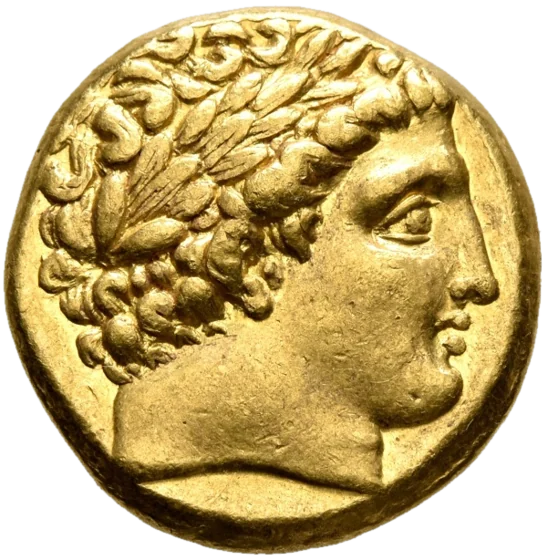
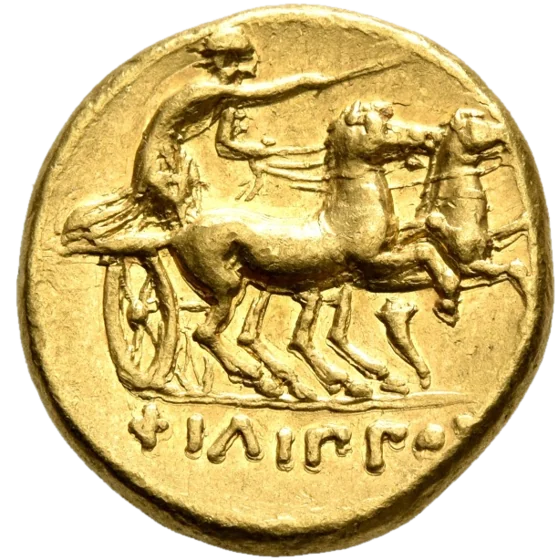
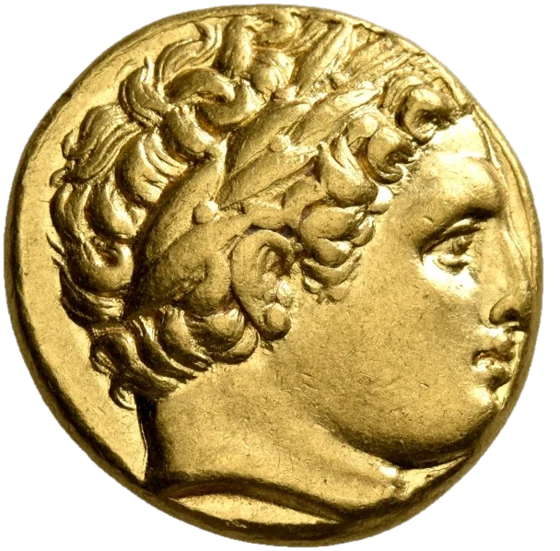
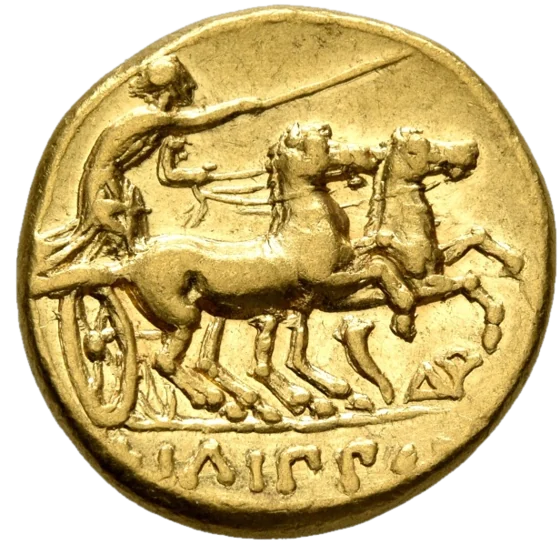
The grade measures wear only, so it can't see why these two differ.
- One is centred, with the whole design on the flan.
- The other is lustrous and a rare variety, but its blank was too small: the back of Apollo's head and the chariot wheel run off the edge.
Strike, centring, flan, style and colour all change how a coin looks. A well-centred VF can be a better coin to own than a lopsided EF. Judge the photo before the number.
Source: Leu Numismatik, Web Auction 28 (2023), lot 807: Philip II stater, Pella, "Extremely fine" ↗ · Leu Numismatik, Web Auction 28 (2023), lot 817: Philip II stater, Abydos, "Struck on a slightly short flan, otherwise, extremely fine" ↗
Sources
- Leu Numismatik, Web Auction 28, lots 807 and 817
Smoothed, tooled, polished
This aureus is graded 'about extremely fine', yet its front field has been smoothed and its edge cut. A grade and a repair can sit side by side.
- Smoothing: scratches flattened out of the field.
- Tooling: hair or letters recut.
- Polishing: a bright shine no mint ever made.
- Test cut: an old nick made to check the gold went all the way through.
Honest houses say so, as Leu did here; NGC wrote 'smoothing' on only 9 of 923 gold coins. To spot it, ask for a video or a photo lit from the side: worked fields look too flat and too bright. Holed and ex-jewellery coins are covered in 'Is it real?'.
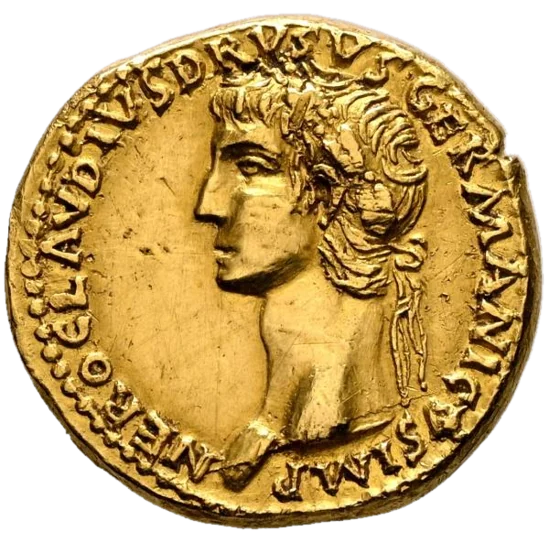
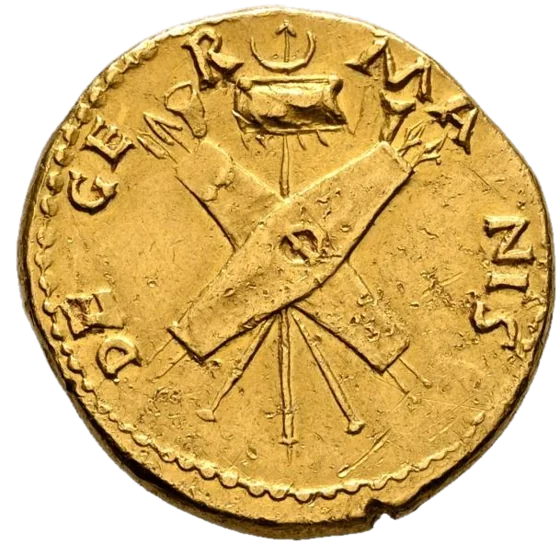
Nero Claudius Drusus, aureus struck under his son Claudius, Lugdunum, AD 41–42 / DE GERMANIS, German shields.
Source: Leu Numismatik, Web Auction 34 (2025), lot 2199: "The left obverse field somewhat smoothed… a small test cut on the edge, otherwise, about extremely fine" ↗ · Mike Markowitz, Grading ancient coins, CoinWeek, 2 July 2018 (NGC's strike and surface scores, the star, Fine Style; smoothing and tooling) ↗
Sources
- Leu Numismatik, Web Auction 34, lot 2199
- CoinWeek, Grading ancient coins (2018)
Gold's own faults
Some faults were made at the mint, others came later. The strike score covers the first kind; the surface score and the lot's 'otherwise' cover the second.
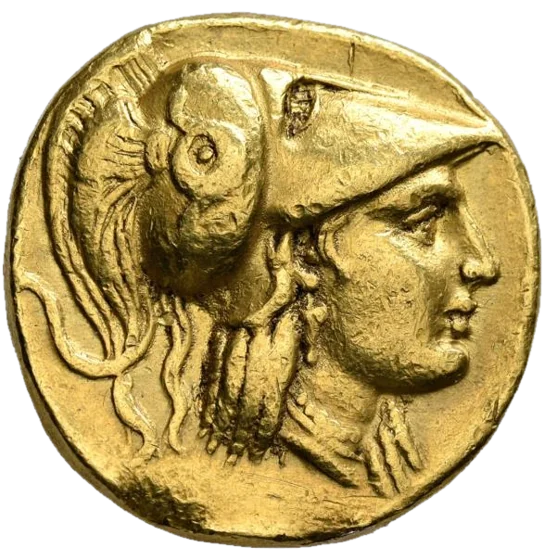
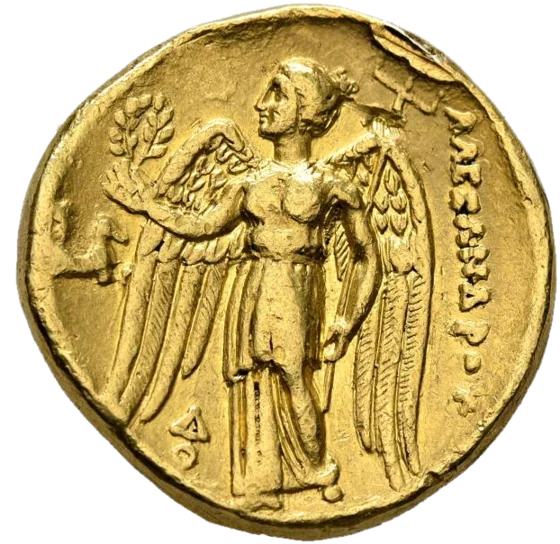
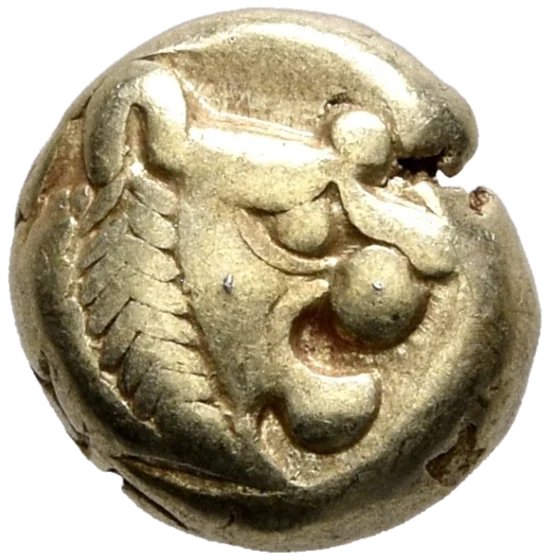
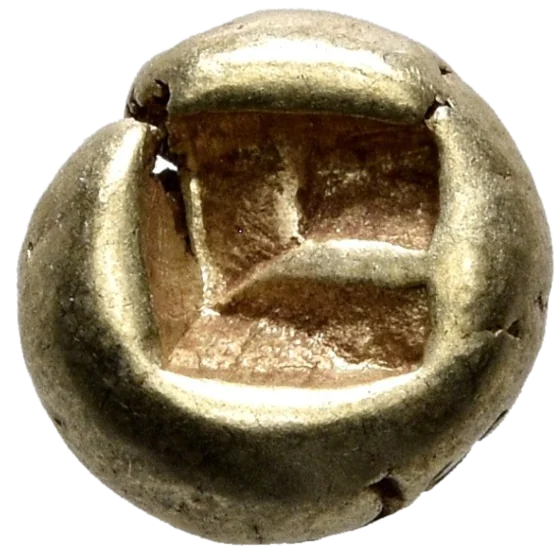
From the mint (most collectors forgive these, some like them):
- Flan crack: the blank split under the hammer.
- Flan flaw: a hollow or fold in the metal.
- Die shift: the design doubled or slipped.
- Die break: a raised line where the die itself cracked.
- Die rust: tiny raised dots from a rusty die.
Afterwards (these cut the price more, because they show how the coin was treated):
- Bends and a wavy flan, often from a jewellery mount.
- Edge knocks, scratches and graffiti.
Source: Leu Numismatik, Web Auction 33 (2025), lot 15: Alexander III stater, "Traces of mounting and somewhat wavy, otherwise, very fine" ↗ · Leu Numismatik, Web Auction 24 (2022), lot 1417: Lydian electrum hemihekte, "Flan crack, otherwise, very fine" ↗
Sources
- Leu Numismatik, Web Auction 33, lot 15 and Web Auction 24, lot 1417
Putting it together
Reading a lot, line by line
A whole lot description, taken apart. This gold stater of Philip II, struck after Alexander's death with a portrait that looks like him, has every part a good description can have.
KINGS OF MACEDON. Philip II, 359-336 BC. Stater (Gold, 17 mm, 8.62 g, 12 h), Kolophon, struck under Philip III by Menander or Kleitos, circa 322-319.1 Laureate head of Apollo to right, with the features of Alexander III 'the Great'. Rev. ΦΙΛΙΠΠOY Charioteer driving biga to right… below to right, tripod.2 Jameson 978 = Kunstfreund 232 = Thompson, Philip, pl. VI, 12 (same dies). Le Rider pl. 93, 26. SNG Alpha Bank 260 (same dies).3 Removed from NGC encapsulation 4184553-001, graded Choice MS (Strike 5/5, Surface 5/5, Fine Style).4 Sharply struck, lustrous and of the finest style, a beautiful example.5 A few very light marks and with a minor scuff on the reverse,6 otherwise, virtually as struck.7
- Who, what, where and when. 17 mm across, 8.62 g, and the die axis: the back is upright when you turn the coin like a page (12 o'clock).
- The design, front then back ("Rev.").
- References to the standard books. "Same dies" ties it to a coin once in the Jameson collection: a die link, and a hint of pedigree.
- The slab it came out of, with NGC's full verdict.
- The praise.
- The faults. Always read this part twice.
- The house's own grade: its top one, short of a perfect FDC.
Read a lot in this order:
- What the coin is.
- The references: how well known the type is, and whether its dies match famous coins.
- Any slab.
- The praise.
- The faults.
- Only then, the grade.
Then look at the photos and decide whether you agree.
Source: Leu Numismatik, Web Auction 28 (2023), lot 16: Philip II stater, Kolophon, "virtually as struck" ↗
Sources
- Leu Numismatik, Web Auction 28, lot 16 (description as printed)