 Gold Coin Catalogue
What one gold coin bought
Wages, prices and bribes from 500 BC to AD 1100: what a daric, an aureus or a solidus was worth to the people who earned and spent one, counted in days of work.
Big money
One gold coin, 400 bronze ones
Under Augustus one gold aureus was worth 25 silver denarii, or 400 bronze asses. Gold was not pocket money.
Shopping was paid in bronze and silver. Gold paid soldiers and officials, bought land and settled big debts, and many people rarely held a gold coin. Cassius Dio, a Roman senator writing about AD 220, explains the word to his Greek readers: the aureus is 'the coin worth one hundred sesterces'. That is why this lesson counts in days of work rather than grams.
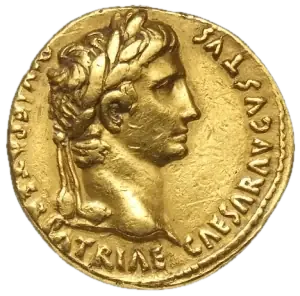
Münzkabinett, Staatliche Museen zu Berlin · CC BY-SA 4.0
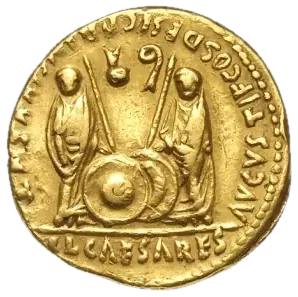
Münzkabinett, Staatliche Museen zu Berlin · CC BY-SA 4.0
Sources
- Cassius Dio, Roman History 55.12.4
- Berlin Münzkabinett 18210802
Persian gold
The 'archer': one daric, twenty silver coins
The Persian kings struck a gold daric of about 8.4 g and a silver siglos, and 20 sigloi made one daric.
Xenophon, an Athenian who marched with a Persian prince's Greek army in 401 BC, counts 3,000 darics as 10 talents of silver. That makes a daric worth 20 Athenian drachmas, and in Athens at the time a skilled builder earned a drachma a day.
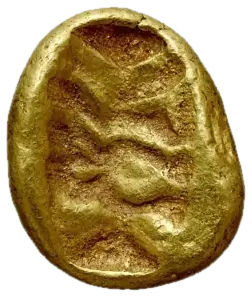
The gold daric and a silver siglos both show the Great King with his bow. Photos: daric, Bibliothèque nationale de France via Wikimedia Commons (public domain); siglos, Münzkabinett Berlin 18215607 (Public Domain Mark), shown twenty times.
Source: Xenophon (Athenian soldier and writer, about 430–355 BC), Anabasis 1.7.18: 3,000 darics = 10 talents ↗ · Anabasis 1.5.6: the siglos ↗ · Ellis-Evans and Kagan (2023) ↗
Sources
- Xenophon, Anabasis 1.5.6 and 1.7.18
- Herodotus 3.95
- A. Ellis-Evans and J. Kagan, 'Bimetallism, coinage, and empire in Persian Anatolia', Phoenix (2023)
- G. Le Rider, La naissance de la monnaie (2001)
Persian gold decided Greek wars
In 407 BC Cyrus gave the Spartan admiral Lysander 10,000 darics. Lysander raised his rowers' pay from three obols a day to four, and Athens' rowers began to desert to him.
In 395 BC the Persian governor Tithraustes sent Timocrates of Rhodes to Greece with gold worth 50 talents of silver, to pay politicians in Thebes, Corinth and Argos to make war on Sparta. The Spartan king Agesilaus, called home from Asia to fight that war, joked that the Great King had driven him out with his 'archers': the archer on the daric.
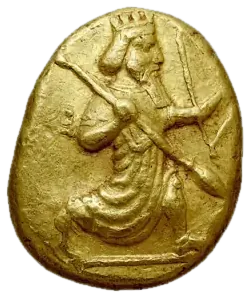
Bibliothèque nationale de France, via Wikimedia Commons · Public domain
Source: Plutarch (Greek biographer, about AD 100), Lysander 4: 10,000 darics ↗ · Xenophon, Hellenica 1.5.7: four obols ↗ · Hellenica 3.5.1: Timocrates ↗ · Plutarch, Agesilaus 15 ↗ · Artaxerxes 20 ↗
Sources
- Plutarch, Lysander 4
- Xenophon, Hellenica 1.5.7 and 3.5.1
- Plutarch, Agesilaus 15.6; Artaxerxes 20.4
A soldier's month: one gold coin
The Greek soldiers hired by the Persian prince Cyrus in 401 BC were paid one daric a month. When they learned they were marching against the Great King himself, he raised it to a daric and a half.
A daric a month is roughly a drachma a day, a builder's wage. Gold also came from Greek cities: Kyzikos on the Sea of Marmara struck staters of electrum, gold mixed with silver. Later on the same march the Thracian king Seuthes offered the men 'a Kyzikene' a month, and at the Black Sea one changed for 28 Athenian drachmas.
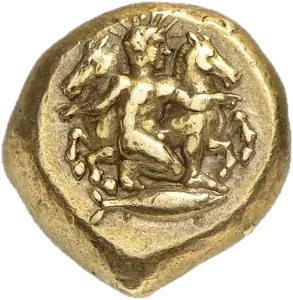
Münzkabinett, Staatliche Museen zu Berlin · Public Domain Mark 1.0
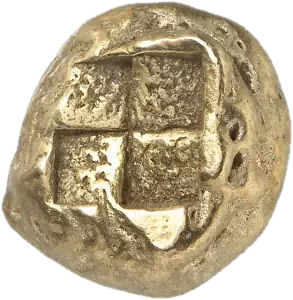
Source: Xenophon, Anabasis 1.3.21: the pay rise ↗ · Anabasis 7.3.10: 'a Kyzikene' a month ↗ · Demosthenes (Athenian orator, 384–322 BC), Against Phormio 23: 28 drachmas ↗
Sources
- Xenophon, Anabasis 1.3.21 and 7.3.10
- Demosthenes 34 (Against Phormio) 23
Greek pay
A drachma a day, citizen or slave
Athens carved its building accounts in stone. On the Erechtheion temple in 408/7 BC workers earned a drachma a day, and citizens, foreign residents and slaves were paid alike.
The accounts name each man beside his pay; five men who fluted one column got 18 drachmas each, and one of them was a slave working beside his owner. Sculptors were paid by the piece: 60 drachmas for a marble figure of the frieze, 240 for a chariot group. At these wages one Persian daric was about twenty days' work. Soldiers were paid on the same scale: at the siege of Potidaea in 432 BC each Athenian hoplite drew two drachmas a day, Thucydides says, 'one for himself and another for his servant'.

Μαρσύας (Wikimedia Commons) · CC BY 2.5
Source: IG I³ 476, the Erechtheion accounts in English (Attic Inscriptions Online) ↗ · Thucydides (Athenian general and historian, about 460–400 BC) 3.17: Potidaea ↗ · Video: 'How Much Were Greek Soldiers Paid?', Classical Numismatics (YouTube) ↗
Sources
- IG I³ 476 (Erechtheion accounts), English translation in Attic Inscriptions Online
Athens melts its golden statues
Near the end of the Peloponnesian War Athens ran out of silver. In 407/6 BC it melted the golden statues of Victory on the Acropolis and struck its first gold coins.
In the Frogs (405 BC) the comic poet Aristophanes says the city ignores its fine old silver and its new gold for cheap bronze, just as it ignores its best citizens. At about 12 of silver to 1 of gold, this stater counted as 24 drachmas. A century later the tyrant Lachares stripped the gold from Athena's own statue to pay his soldiers.
Source: Aristophanes (Athenian comic poet), Frogs 718 ↗ · Pausanias (Greek travel writer, 2nd century AD) 1.25.7: Lachares ↗
Sources
- Aristophanes, Frogs 718–737, with the ancient notes on line 720
- Pausanias 1.25.7
- Bibliothèque nationale de France (photo, public domain)
Philip's gold: a stater for 20 drachmas
Philip II of Macedon opened the gold mines at Krenides, renamed Philippi, in the 350s BC, and struck so many staters that gold fell to ten times the value of silver.
His stater of 8.6 g was worth 20 silver drachmas. Wages had risen by then: at Eleusis in 329/8 BC a skilled builder earned 2 to 2½ drachmas a day, so a stater was eight to ten days' work. Plutarch reports 'a common saying that the cities of Greece were taken, not by Philip, but by Philip's money'.
Source: Plutarch, Aemilius Paullus 12: 'Philip's money' ↗ · IG II² 1672, Eleusis accounts (no free translation online)
Sources
- Plutarch, Aemilius Paullus 12.6
- IG II² 1672 (Eleusis building accounts, 329/8 BC)
- W. T. Loomis, Wages, Welfare Costs and Inflation in Classical Athens (1998)
- Ellis-Evans and Kagan (2023)
Alexander's veterans: a talent each
When Alexander sent about 10,000 worn-out Macedonian veterans home from Opis in 324 BC, he paid them up to the day they would reach home, and gave each man a talent on top.
A talent was 6,000 drachmas: 300 gold staters at 20 drachmas each. At the 2 to 2½ drachmas a day a skilled builder earned at Eleusis a few years earlier, that is seven years or so of daily work, for every man.
Source: Arrian (Greek historian of Alexander, 2nd century AD), Anabasis 7.12: a talent each (English, Chinnock) ↗ · Video: 'How Much Were Greek Soldiers Paid?', Classical Numismatics (YouTube) ↗
Sources
- Arrian, Anabasis of Alexander 7.12.1
A mina in one gold coin
The Ptolemies of Egypt struck a giant gold coin of almost 28 g, the mnaieion: it took its name from being worth one mina, 100 silver drachmas.
Around 200 BC a treaty between King Attalos I of Pergamon and the Cretan city of Malla paid each soldier a drachma a day and each officer two. At that rate one mnaieion was over three months of a soldier's pay; only roughly, since Egypt's drachmas were lighter than the Aeginetan ones of the treaty.
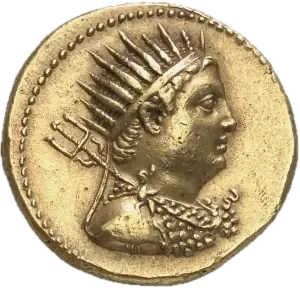
Münzkabinett, Staatliche Museen zu Berlin · CC BY-SA 4.0
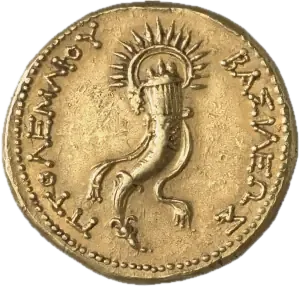
Münzkabinett, Staatliche Museen zu Berlin · CC BY-SA 4.0
Source: Leu Numismatik, auction 26 lot 48: 'valued at one Mina (or 100 drachms) in silver' ↗ · Treaty of Attalos I and Malla, in English (attalus.org) ↗ · Video: 'How Much Were Greek Soldiers Paid?', Classical Numismatics (YouTube) ↗
Sources
- Leu Numismatik, auction 26 lot 48 (note on the name)
- Treaty of Attalos I and Malla (about 200 BC)
Gold against silver
How much silver for one gold?
Gold's price in silver was never fixed. In Greece it fell from 14 to 1 in the 430s BC, to 12 to 1 by 404, and to 10 to 1 once Philip's gold arrived.
Athens' accounts for the gold of the Parthenon statue use 14 to 1. Late in the Peloponnesian War silver grew scarce and the rate fell to 12. The gold of Philip's mines took it to 10, and Alexander's empire kept that rate. Persia's daric and siglos had been made to fit about 13⅓ to 1.
Source: Ellis-Evans and Kagan (2023) ↗ · Herodotus (Greek historian, 5th century BC) 3.95 ↗
Sources
- Ellis-Evans and Kagan, Phoenix (2023)
- W. E. Thompson on the Parthenon accounts
- Herodotus 3.95
Rome: twelve to one, then fourteen
Augustus struck 40 aurei from a Roman pound of gold and valued each at 25 denarii, which puts gold at about 12 times silver.
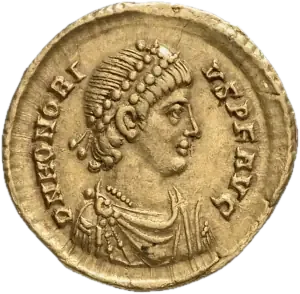
Four centuries later the rate is written into law. In AD 397 the emperors Arcadius and Honorius let taxpayers pay 5 gold solidi for each pound of silver they owed. With 72 solidi to a pound of gold, that is 14.4 of silver to 1 of gold.
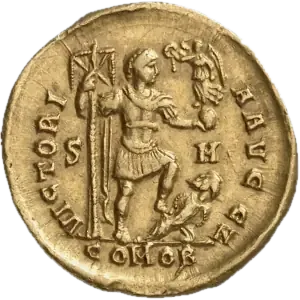
Münzkabinett, Staatliche Museen zu Berlin · CC BY-SA 4.0
Source: Pliny the Elder (Roman writer, died AD 79), Natural History 33.13 in this edition: 40 to the pound ↗ · Codex Theodosianus 13.2.1 (Latin) ↗
Sources
- Pliny the Elder, Natural History 33.47
- Codex Theodosianus 13.2.1 (AD 397)
Roman pay and prices
A legionary's pay: nine gold coins a year
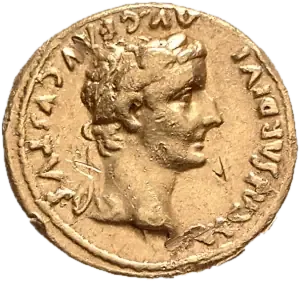
Under Augustus a legionary earned 225 denarii a year, or 9 aurei, so one aureus was about 40 days of a soldier's pay.
Food, clothes and kit came out of it. When the legions on the Danube mutinied after Augustus died in AD 14, Tacitus has them complain that 'body and soul are valued at ten asses a day'. Ten asses a day for a 360-day year is exactly 225 denarii. A century and a half earlier the Greek historian Polybius gives a legionary two obols a day, a third of a drachma, with grain and kit charged against it.
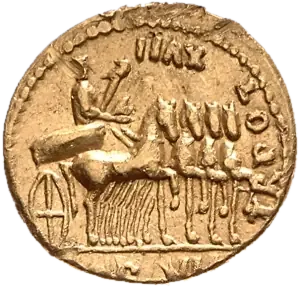
Münzkabinett, Staatliche Museen zu Berlin · CC BY-SA 4.0
Source: Tacitus (Roman senator and historian, about AD 100), Annals 1.17 ↗ · Polybius (Greek historian of Rome's rise, about 200–118 BC) 6.39: two obols a day ↗ · Video: 'How Much Were Greek Soldiers Paid?', Classical Numismatics (YouTube) ↗
Sources
- Tacitus, Annals 1.17
- Polybius 6.39.12–15
- M. A. Speidel, 'Roman army pay scales', Journal of Roman Studies 82 (1992)
Domitian adds a fourth pay day
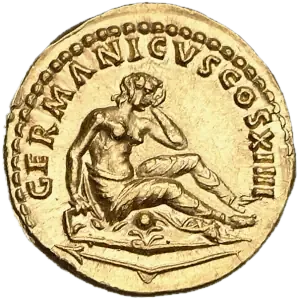
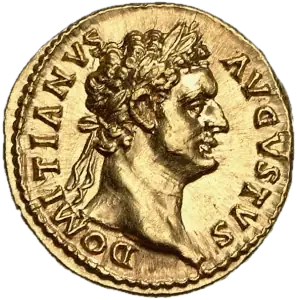
Soldiers were paid three times a year, 3 aurei each time. Domitian added a fourth payment, so pay rose from 9 to 12 aurei a year.
Suetonius, who wrote the lives of the first twelve Caesars around AD 120, puts it in one line: Domitian 'increased the pay of the soldiers one fourth, by the addition of three gold pieces'. It was the first rise in about a century, and it came around his war on the Chatti in Germany.
Münzkabinett, Staatliche Museen zu Berlin · CC BY-SA 4.0
Source: Suetonius (Roman biographer, about AD 120), Domitian 7 ↗
Sources
- Suetonius, Domitian 7.3
- Speidel (1992)
Pompeii: a hundred cups of the best wine
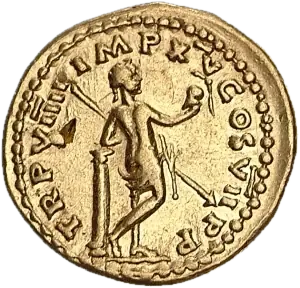
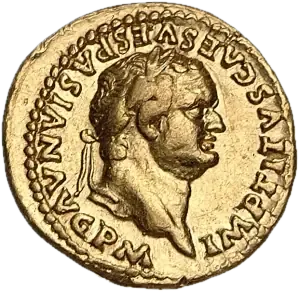
A notice painted at a Pompeii bar reads: 'Hedone says: you drink here for one as. Give two and you'll drink better. Give four and you'll drink Falernian.' At 400 asses to the aureus, one gold coin bought 100 cups of the finest wine.
Falernian, from the slopes north of Naples, was Rome's most famous wine. Vesuvius buried the town in AD 79, so these are prices from its last years. At ordinary wine prices one aureus was 400 cups.
Münzkabinett, Staatliche Museen zu Berlin · CC BY-SA 4.0
Source: CIL IV 1679, painted notice in Pompeii (Corpus of Latin Inscriptions, vol. IV)
Sources
- CIL IV 1679 (the notice, Pompeii VII.2.45)
A country estate: 30,000 aurei
Pliny the Younger, a rich senator, thought of buying the estate next to his own. It was offered at 3 million sesterces: 30,000 aurei.
In his letter to a friend about it he notes it had once fetched 5 million, but the tenants were poor and the land run down. 30,000 aurei was a year's pay for about 2,500 legionaries. Land was what the rich did with their gold. We don't know whether he bought it.
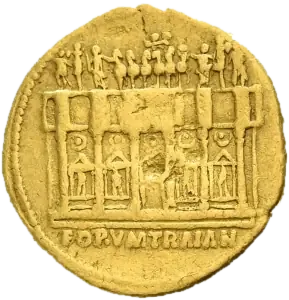
Münzkabinett, Staatliche Museen zu Berlin · CC BY-SA 4.0
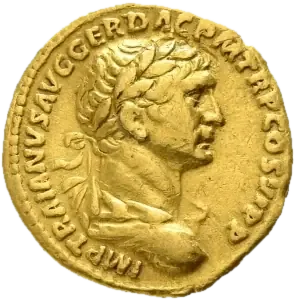
Source: Pliny the Younger (Roman senator, about AD 61–113), Letters 3.19 (Latin) ↗
Sources
- Pliny the Younger, Letters 3.19
The Roman Empire sold at auction
In AD 193 the Praetorian Guard murdered the emperor Pertinax and sold the throne to the highest bidder. Didius Julianus won with 25,000 sesterces a man: 250 aurei each.
Cassius Dio, a senator in Rome at the time, describes the bidding at the camp gates. Sulpicianus offered 20,000; Julianus jumped by 5,000 at once, showing the figure with his fingers. 250 aurei was about twenty years of a legionary's pay. Julianus reigned 66 days and was killed in the palace.
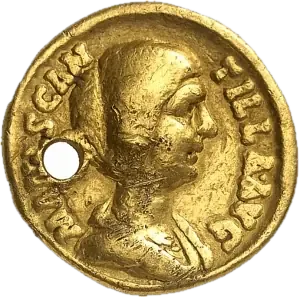
Münzkabinett, Staatliche Museen zu Berlin · CC BY-SA 4.0
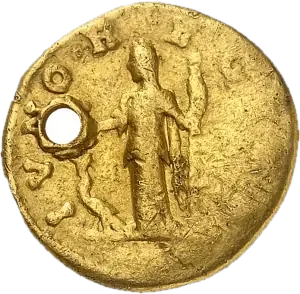
Source: Cassius Dio, Roman History 74.11 (the auction) and 74.17 ↗
Sources
- Cassius Dio, Roman History 74.11 and 74.17
When small change collapsed
'Silver' coins with almost no silver
By the 260s the empire's silver coin was mostly bronze. Aurelian's reformed coin of 274 was marked XXI, a promise of about 5% silver.
Prices counted in these coins climbed. In Roman Egypt, where papyri record prices, wheat jumped about tenfold soon after the reform. Gold coins kept their worth, and became the money people trusted.
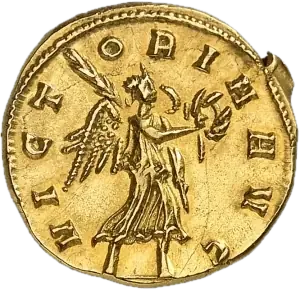
Münzkabinett, Staatliche Museen zu Berlin · CC BY-SA 4.0
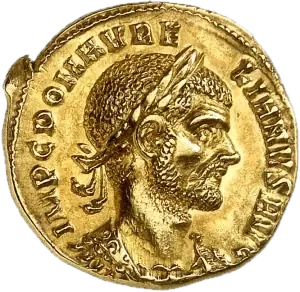
Source: Estiot, the reform of 274 (MER-RIC) ↗
Sources
- S. Estiot, 'Aurelian's reform', MER-RIC (Roman Imperial Coinage online)
- D. Rathbone, 'Monetisation, not price-inflation, in third-century AD Egypt?' (1996)
Diocletian sets the price of everything
In AD 301 Diocletian published maximum prices for over a thousand goods and wages. A farm labourer was to get 25 denarii a day plus food; a pound of gold was set at 72,000 denarii.
The aureus was then struck 60 to the pound, so it was worth 1,200 denarii: 48 days of a farm labourer's pay. Falernian wine was capped at 30 denarii a pint (an Italian sextarius). In Pompeii a cup had cost a quarter of a denarius.

Matthias Kabel · CC BY-SA 3.0
Source: The Edict on Maximum Prices in English (Kropff 2016) ↗
Sources
- Edict on Maximum Prices (AD 301), sections 7.1a, 28.1a, 2.7
- A. Kropff, English translation (2016)
The price limits failed, and gold won
Lactantius, a Christian writer at Diocletian's court, says goods vanished from the markets and blood was shed over small sums until the law was dropped.
Gold became the money that held its value. Constantine struck the solidus at 72 to the pound from about AD 310. By the 340s a pound of gold cost around 30,000 talents in Egyptian accounts, some 45 million denarii: over 600 times the edict's price.
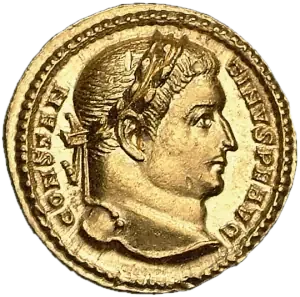
Münzkabinett, Staatliche Museen zu Berlin · CC BY-SA 4.0
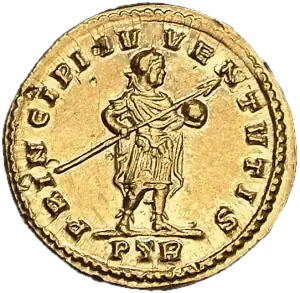
Source: Lactantius (Christian teacher of rhetoric, about AD 250–325), On the Deaths of the Persecutors 7 ↗ · Bagnall and Bransbourg (2019) ↗
Sources
- Lactantius, On the Deaths of the Persecutors 7
- R. S. Bagnall and G. Bransbourg, The Constantian Monetary Revolution, ISAW Papers 14 (2019)
The solidus
Taxes in gold, pay in gold
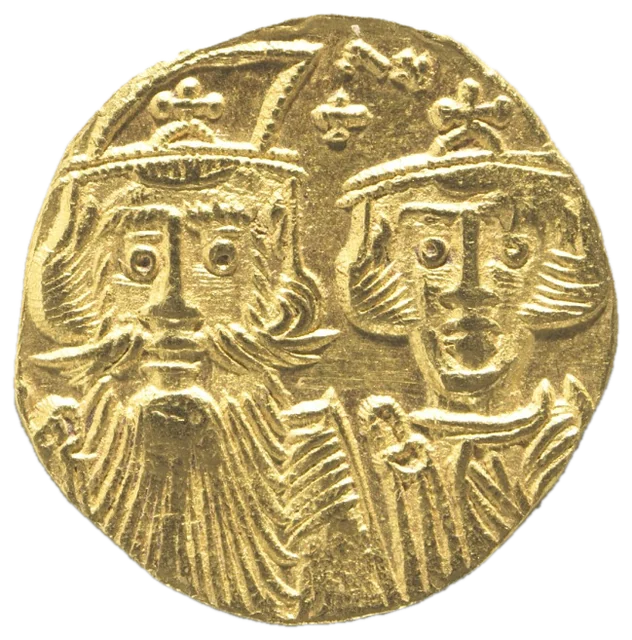
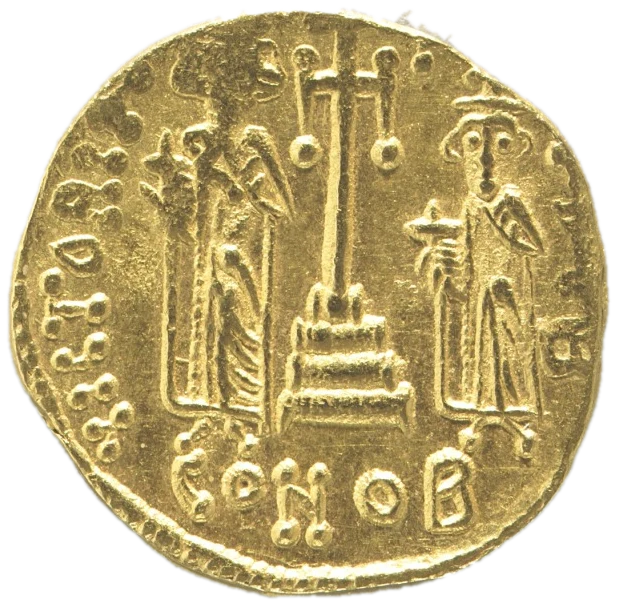
From the 4th century the state took more and more of its taxes in gold and paid soldiers and officials in gold, so the solidus went round a great circle from taxpayer to treasury to payroll.
Accounts were kept in solidi and carats, a carat being 1/24 of a solidus. Farmers sold their crops for gold to pay the tax collector, and the gold came back as pay to soldiers, who spent it in the towns.
The Cleveland Museum of Art · CC0
Source: The Economic History of Byzantium (Dumbarton Oaks, free online) ↗
Sources
- A. H. M. Jones, The Later Roman Empire (1964)
- J. Banaji, Agrarian Change in Late Antiquity (2001)
- C. Morrisson and J.-C. Cheynet, 'Prices and wages in the Byzantine world', in The Economic History of Byzantium (2002)
Paying Attila: 2,100 pounds of gold a year
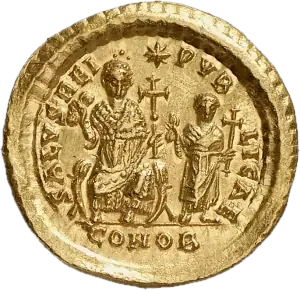
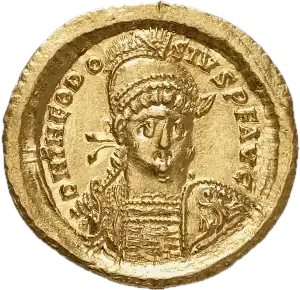
After Attila's Huns beat the eastern Roman army, they were promised 6,000 pounds of gold at once and 2,100 pounds a year, three times the old payment.
2,100 pounds is 151,200 solidi a year. Our source is Priscus, a Roman who later went on an embassy to Attila's court and wrote its history. The payments ran until 450, when the new emperor Marcian refused.
Münzkabinett, Staatliche Museen zu Berlin · CC BY-SA 4.0
Source: Bury, History of the Later Roman Empire, ch. IX ↗
Sources
- Priscus, fragments
- J. B. Bury, History of the Later Roman Empire (1923), chapter IX
The 'Endless Peace': 11,000 pounds of gold
In 532 Justinian bought peace with Persia for 110 centenaria of gold: 11,000 pounds, or 792,000 solidi.
Procopius, Justinian's own historian, records the sum. 792,000 solidi was a year's wages for some 80,000 workers. The treaty was called the Endless Peace; eight years later the Persian king Khusrau invaded Syria and sacked Antioch.
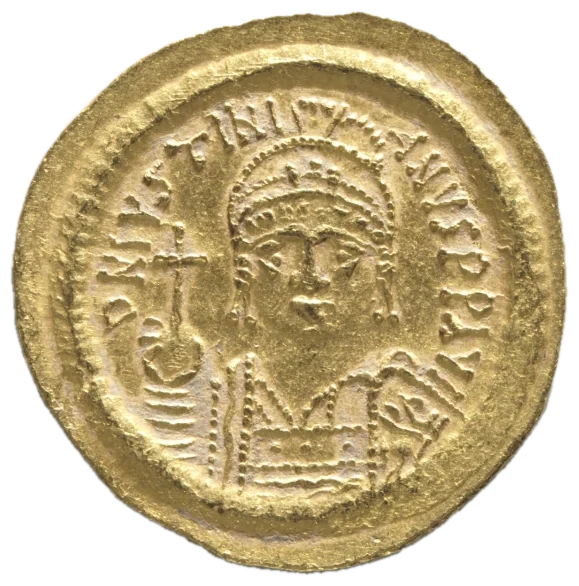
The Cleveland Museum of Art · CC0
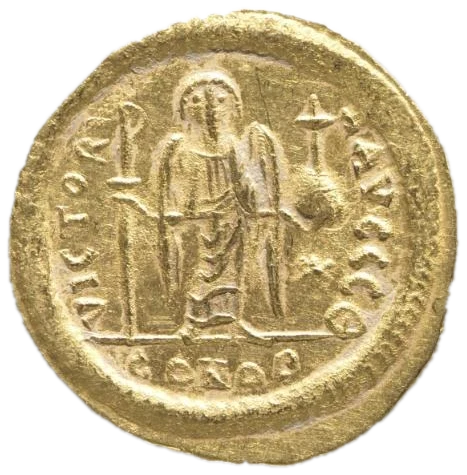
Source: Procopius (Justinian's court historian), Wars 1.22 ↗
Sources
- Procopius, Wars 1.22
A payroll in gold, from 7,200 solidi down to 7
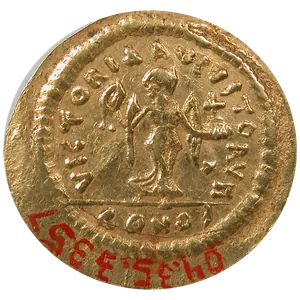
When Justinian retook North Africa in 534 he set the yearly pay of its new government in gold: 7,200 solidi (100 pounds of gold) for the governor, 9 for a tax collector or a bodyguard, 7 for the most junior clerks.
The chief doctor got 99 solidi, the teachers of grammar and of public speaking 70 each. A junior clerk's 7 solidi was 21 tremisses, the third-of-a-solidus coin, in a year. Ordinary wages outside government ran at about one solidus a month for centuries.
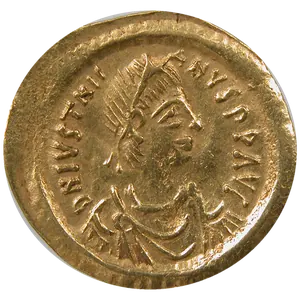
The Metropolitan Museum of Art · Public domain (Met Open Access)
Source: Code of Justinian 1.27 (Latin) ↗ · Morrisson and Cheynet, in The Economic History of Byzantium ↗
Sources
- Codex Justinianus 1.27.1 (AD 534)
- Morrisson and Cheynet (2002), table 16
A solidus of wheat: about 300 kilos
In 6th-century Egypt a solidus bought about 10 artabas of wheat, 8 to 12 depending on the harvest: some 300 kg, about a year of bread for one adult.
In the capital it was dearer. Bread from Constantinople's public distribution was valued at 4 solidi a year in 578, for about a kilo a day. Morrisson and Cheynet find modest wages 'around 1 nomisma a month' from the 6th century to the 13th.
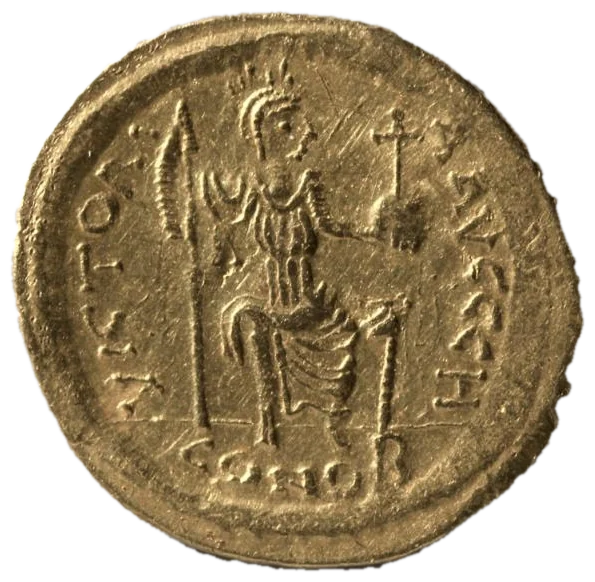
The Cleveland Museum of Art · CC0
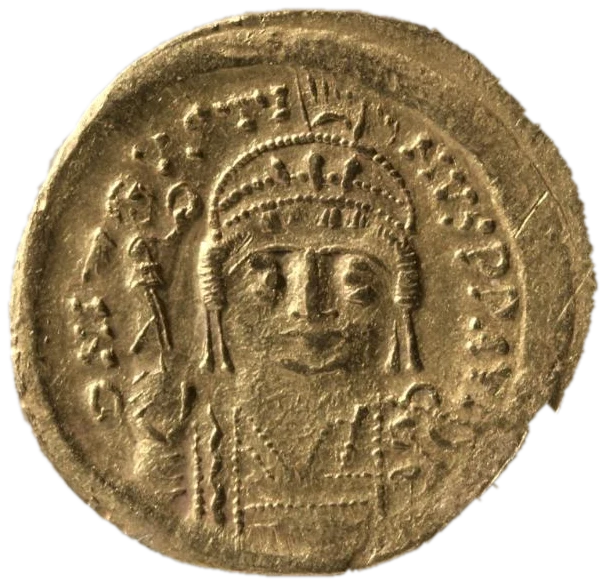
Source: Morrisson and Cheynet, in The Economic History of Byzantium ↗
Sources
- Morrisson and Cheynet (2002), with John of Ephesus on the bread of 578
A gold coin wins an argument in Sri Lanka
A Greek merchant, Sopatrus, told how the king of Sri Lanka compared a Roman solidus with a Persian silver coin and decided the Romans were the greater power.
Kosmas, an Alexandrian merchant later called 'the sailor to India', wrote it down in his Christian Topography. 'The Roman coin had a right good ring, was of bright metal and finely shaped, for pieces of this kind are picked for export to the island.' Whether or not it happened, it shows how the Byzantines saw their gold: as the coin trusted everywhere.
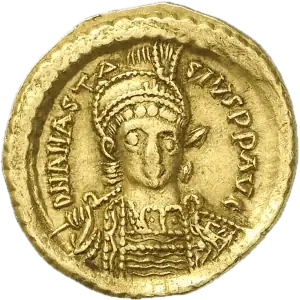
Münzkabinett, Staatliche Museen zu Berlin · Public Domain Mark 1.0
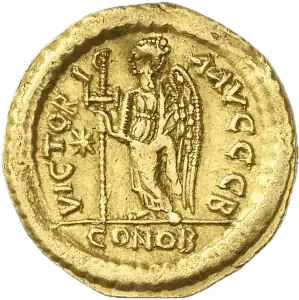
Source: Kosmas (Alexandrian merchant and monk, 6th century), Christian Topography 11, in English ↗
Sources
- Kosmas Indikopleustes, Christian Topography 11, trans. J. W. McCrindle (1897)
Byzantine gold
Pay day at the palace, by the pound
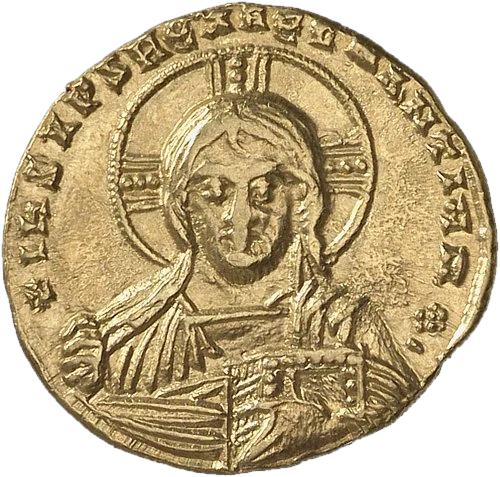
Liudprand of Cremona, an Italian envoy, watched Constantine VII pay his court before Easter 950. Senior officials took 24 pounds of gold each, patricians 12, lesser officers 7 down to 1.
The bags lay on a table 15 feet long. The marshal of the palace carried his away on his shoulders; the army commander and the admiral had to drag theirs. Asked how he liked it, Liudprand said it would please him more if it did him some good, and was given a pound of gold (72 coins) and a cloak. 24 pounds was 1,728 coins, well over a century of an ordinary wage.
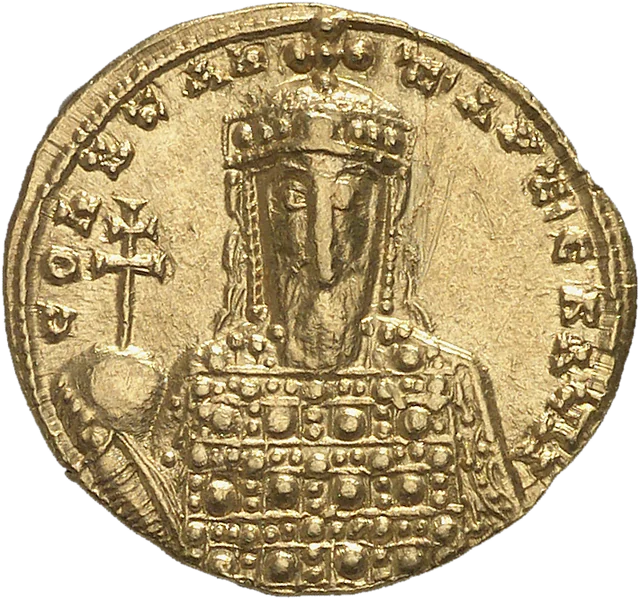
Münzkabinett, Staatliche Museen zu Berlin · Public Domain Mark 1.0
Source: Liudprand (bishop of Cremona and envoy), Antapodosis 6.10, in English ↗
Sources
- Liudprand of Cremona, Antapodosis 6.10, trans. F. A. Wright (1930)
A new gold coin after the crash
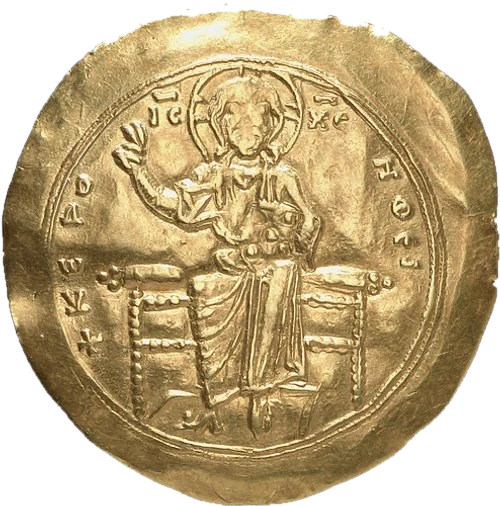
By about 1080 the 'gold' nomisma was only about a third gold. In 1092 Alexios I replaced it with the hyperpyron, 'refined by fire', of about 20½ carats.
Tax bills and prices had to be worked out again: for years officials and taxpayers argued over which old coins were worth what, until a new reckoning around 1109. The hyperpyron then stayed the empire's gold coin for some two hundred years.
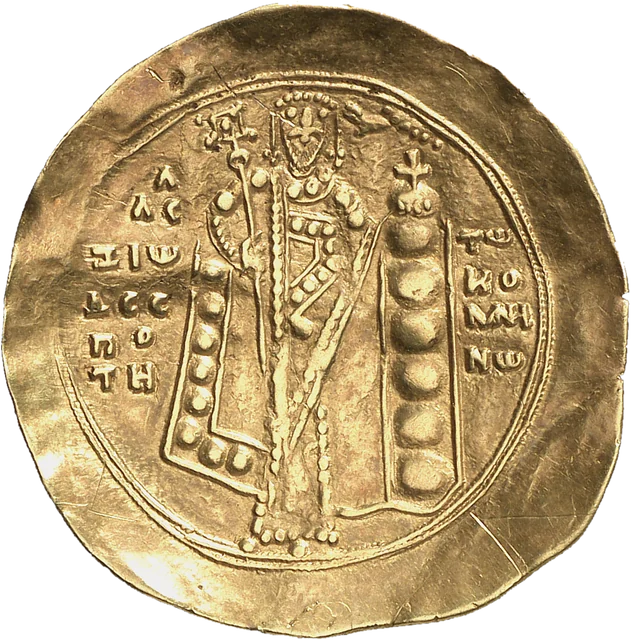
Münzkabinett, Staatliche Museen zu Berlin · Public Domain Mark 1.0
Source: The Economic History of Byzantium ↗
Sources
- M. F. Hendy, Coinage and Money in the Byzantine Empire 1081–1261 (1969)
- Morrisson and Cheynet (2002)
In today's terms
Then and now, side by side
Each of these coins was worth days or weeks of pay when it was new. Melted down today, the gold in them is worth a few hundred pounds.
| Coin | Worth then | Its gold today | Collectors pay |
|---|---|---|---|
| Daric, Persia, c. 400 BC | a soldier's month; 20 days of a builder at Athens | 8.1 g, about £790 | £1,600–9,400 |
| Stater of Philip II, 340s BC | 8–10 days of a skilled builder (329 BC) | 8.5 g, about £830 | £3,100–16,000 |
| Aureus of Augustus | 40 days of a legionary's pay (AD 14) | 7.7 g, about £760 | £2,200–11,300 |
| Solidus of Justinian I | about a month of an ordinary wage | 4.4 g, about £430 | £420–2,100 |
| Hyperpyron of Alexios I, 1092 | about a month of an ordinary wage | 3.8 g, about £370 | £400–1,100 |
Collectors pay far more than the gold, for age, fame and condition. The ranges are the catalogue's own auction records for good examples over the last seven years.
Sources
- Gold price: this site's Modern page, 5 Nov 2026
- Prices: Ancient catalogue, sales 2019–2026
Why count in days of work, not grams
A solidus holds about £430 of gold at today's price, but it was a month's wage. Counted that way it was worth more like a month at the UK minimum wage today: about £2,000.
Gold was much scarcer, compared with work, than it is now. Prices in gold stayed remarkably steady in Byzantium from the 6th to the 11th century, so the solidus is a good yardstick over a long time. Wages are the fairest comparison: they tell you how long someone worked to hold one of these coins.
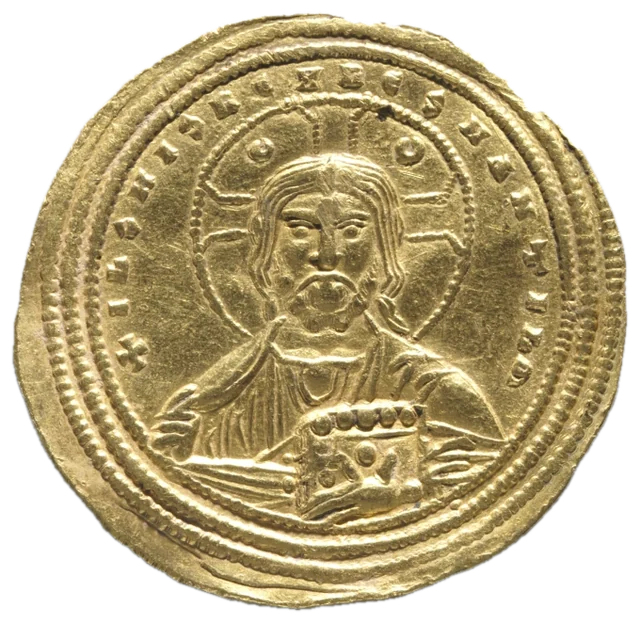
The Cleveland Museum of Art · CC0
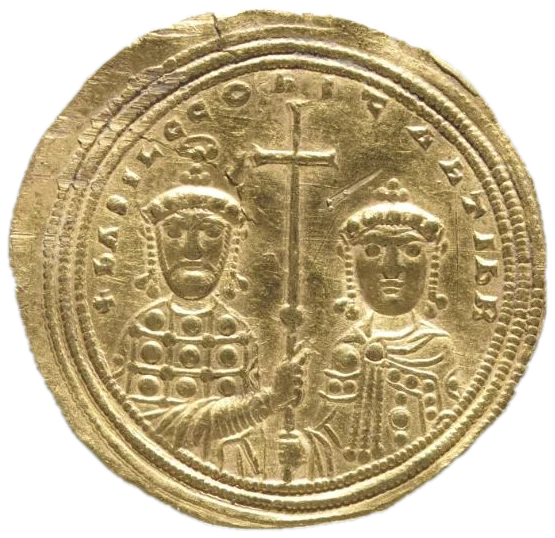
Source: Morrisson and Cheynet, in The Economic History of Byzantium ↗ · GOV.UK, minimum wage rates ↗
Sources
- Morrisson and Cheynet (2002): 'many prices expressed in gold remained fairly stable from the sixth to the eleventh century'
- UK National Living Wage £12.71 an hour from April 2026 (37.5 hours a week)