Gold Coin Catalogue History map ↗ Learn How coins were made Is it real?
All lessons For collectors › Is it real? ×

Is it real? for collectors

People have faked gold coins for as long as there have been coins. How museums and collectors catch the fakes, and what to check before you bid.

Ancient fakes and tests

1 of 14 · c. 600 BC

Fakes are as old as coins

Some of the very first coins, struck in Lydia before 550 BC, were already faked: this one is a silver core wrapped in a thin skin of electrum.

Picture: Münzkabinett, Staatliche Museen zu Berlin · Public Domain Mark
Tell me more

A plated coin, which collectors call a fourrée (French for 'filled'), was made by wrapping a cheap core in a sheet of precious metal and striking it like a real coin. Where the skin has split, the core shows through, as in the square punch on the back of this one. The Greek historian Herodotus repeats a story that Polycrates, tyrant of Samos, paid off a Spartan army with gilded lead coins, though he himself calls it 'a foolish tale'.

Lydia, lion's head, 625–550 BC, 4.57 g: an ancient plated coin with a silver core.

Source: Herodotus, Histories 3.56 (the gilded lead coins) ↗ · Münzkabinett Berlin 18210880: plated electrum coin of Lydia ↗

2 of 14 · 375/4 BC

Athens hires a coin tester

In 375/4 BC Athens passed a law that put a public coin tester in the Agora: real Athenian silver had to be accepted, and a fake was cut through and taken away.

Picture: Münzkabinett, Staatliche Museen zu Berlin · Public Domain Mark
Tell me more

The law names the fakes the tester looked for: coins with a bronze or lead core, and counterfeits. He cut them across and they were dedicated to the Mother of the Gods; if he was not at his post, he got fifty lashes. A second tester was posted at the harbour of Piraeus. The stone with the law was found in the Agora in 1970, built into the wall of a drain. The quickest test was a cut: one chisel blow, deep enough to go through any plating. On a plated coin the copper or lead core shows in the cut; on a good coin it is silver all the way down. Traders far from Athens did the same, and many owls found in Egypt and the Near East carry one or more test cuts. Collectors read a test cut as part of the coin's story, not as a sign of a fake: someone checked it and it passed. It lowers the price a little, as any mark does.

An owl of Athens, about 475–450 BC, 17.20 g, with a test cut chiselled in from the edge below the owl. Its full weight shows it was good silver all through: it passed the test.

Source: Stroud, 'An Athenian Law on Silver Coinage', Hesperia 43 (1974), free from the American School at Athens ↗ · Münzkabinett Berlin 18201005: owl tetradrachm of Athens with a test cut ↗

  • Rhodes and Osborne, Greek Historical Inscriptions 25
Archimedes on the Fields Medal
Archimedes (about 287–212 BC) on the Fields Medal. He showed that a king's gold wreath had silver mixed in by measuring how much water it pushed aside.
BasiliscusVictory
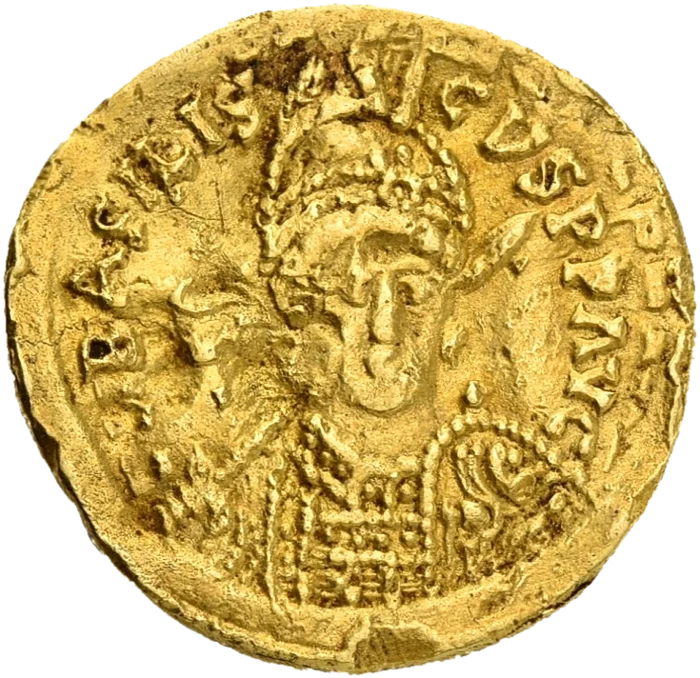
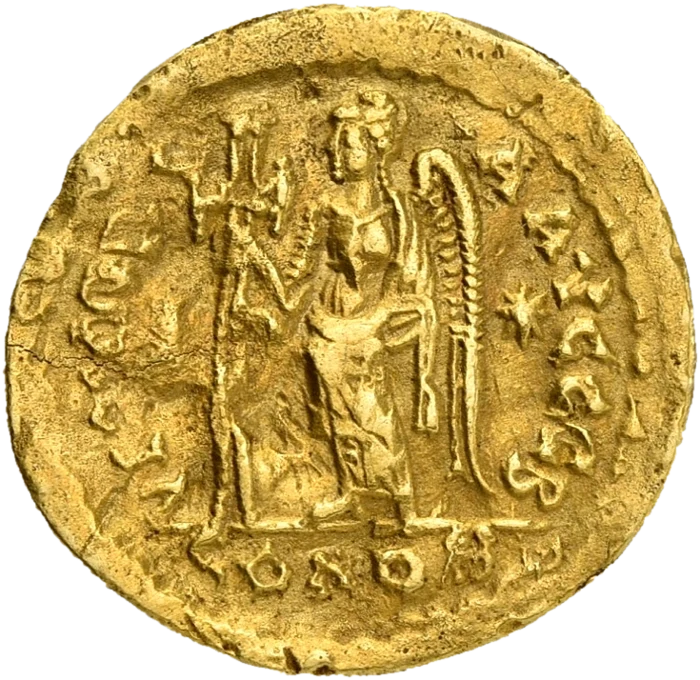
Caught by the scale: a cast solidus of Basiliscus in Berlin, 4.72 g, too heavy for a real one (about 4.5 g).
3 of 14 · 3rd century BC

Eureka!

Gold takes up less room than silver of the same weight. Archimedes dipped King Hieron's gold wreath in a full bowl: it pushed out more water than a lump of pure gold of the same weight, so silver had been mixed in.

Tell me more

The Roman architect Vitruvius tells the story. King Hieron II of Syracuse suspected that his goldsmith had kept some of the gold for a wreath and mixed in silver instead. Archimedes saw the answer as he stepped into a bath and the water rose. He ran home shouting 'Eureka!', 'I have found it!' The reason it works: gold is heavy. A piece weighs 19.3 times as much as the same volume of water, silver 10.5, copper 9. So gold mixed with silver takes up more room than pure gold of the same weight, and pushes aside more water. Collectors use the same test today: weigh the coin in air, then hung in water, and the difference gives its density. It catches plated coins and gold mixed with cheaper metal. It cannot catch a fake made of good gold, so collectors also check the weight against the normal range for the type. That is how this cast solidus of Basiliscus in Berlin gave itself away: at 4.72 g it is too heavy for a real one (about 4.5 g).

Historians disagree: Vitruvius wrote about 200 years after Archimedes, and the bath-tub story may be a legend.

Source: Vitruvius, On Architecture 9, preface 9–12 (Archimedes and the wreath) ↗ · Münzkabinett Berlin 18279039: cast solidus of Basiliscus, too heavy ↗

4 of 14 · 1st century AD

Fakes worth collecting

Pliny the Elder says Romans studied fake coins as curiosities, and some paid several real coins for one. Collectors still buy ancient fakes, like this plated 'aureus' of Caracalla.

Picture: Münzkabinett, Staatliche Museen zu Berlin · Public Domain Mark
Tell me more

Pliny the Elder (AD 23–79) wrote that forgery was the one craft people studied with care: a false denarius was examined as a curiosity, and a fake was bought for many real ones. Ancient fourrées are collected the same way today, as part of the coin's history. They are honest objects if they are sold as what they are, and they cost far less than a solid gold coin. This one, struck AD 199–200, is a gold skin over base metal, and the core shows through on the back.

Caracalla, plated aureus, 4.77 g. A solid aureus of these years weighs about 7.2 g.

Source: Pliny the Elder, Natural History 33.46 (Bostock's chapter numbers; 33.132 in modern editions) ↗ · Münzkabinett Berlin 18200434: plated aureus of Caracalla ↗

Modern forgers

5 of 14 · 1772–1830

Becker and his 'old gentlemen'

Carl Wilhelm Becker of Speyer cut hundreds of dies by hand, in the style of the finest Greek and Roman coins, and struck them with a hammer like an ancient mint.

Picture: Münzkabinett, Staatliche Museen zu Berlin · Public Domain Mark
Tell me more

George Hill of the British Museum, who wrote the classic study, records that Becker aged new coins in a box of iron filings fixed to his carriage, which he called taking his old gentlemen for a drive. Many of his steel dies survive in Berlin. Some copy real coins, like the P. Clodius moon coin; others invent coins that never existed, like this Syracusan decadrachm. After his death, strikes from his dies in tin and bronze were sold to collectors who wanted his work.

Left: Becker's steel die for a Syracusan decadrachm that never existed. Right: a later tin strike from his P. Clodius dies.

Historians disagree: The carriage story comes from one of Becker's agents, as told by Hill; the details may have grown in the telling.

Source: Hill, Becker the Counterfeiter, part II (1925), scan at the Internet Archive ↗ · Münzkabinett Berlin 18301146: Becker's lower die, invented decadrachm of Syracuse ↗ · Münzkabinett Berlin 18301292: tin strike from Becker's P. Clodius dies ↗

  • Münzkabinett Berlin 18301146, 18305203, 18301292
6 of 14 · 1820s–1840s

The forgers of Smyrna

In the 1820s a forger called Caprara struck fine Greek coins at Smyrna, today's İzmir, including the gold staters of Pantikapaion with the satyr.

Picture: Münzkabinett, Staatliche Museen zu Berlin · Public Domain Mark
Tell me more

Caprara was exposed in 1826 and later went blind. Berlin keeps an electrotype copy of one of his Pantikapaion staters: a copy of a fake. About twenty years later another skilled die-cutter at Smyrna, whom the numismatist Louis Mayer nicknamed 'the Becker of Smyrna', made gold coins of Amyntas, a king of Galatia who in fact struck silver. Warwick Wroth of the British Museum wrote in 1899 that this forger 'reckoned on, and actually found, a considerable market'.

Source: Münzkabinett Berlin, Caprara (biography and his pieces) ↗ · Wroth, Catalogue of the Greek Coins of Galatia, Cappadocia and Syria (British Museum, 1899), on the Amyntas gold ↗ · Münzkabinett Berlin 18282597: electrotype of a Caprara forgery ↗

  • Kinns, The Caprara Forgeries (1984)
  • Wroth, BMC Galatia, Cappadocia and Syria (1899), introduction
7 of 14 · 1838–1916

Electrotypes (museum copies)

In the 19th century museums made exact copies of famous coins by electroplating metal into a mould: electrotypes, made for study and display.

Tell me more

Each side is a thin shell, and the two shells are joined at the edge, so an electrotype often shows a seam round the rim. Many are silver or gold over copper, and the weight is wrong. Some were later sold as originals. This copy of an Athenian owl shows a green tint where the copper comes through.

Electrotype of an Athenian 'New Style' tetradrachm, Cleveland Museum of Art.

Source: Cleveland Museum of Art 1916.977, electrotype replica of a tetradrachm ↗

Real: AthenaReal: Nike
Real: struck about 323–316 BC, 8.54 g
Fake: AthenaFake: Nike
Fake: cast in gold in the 1800s, 8.50 g
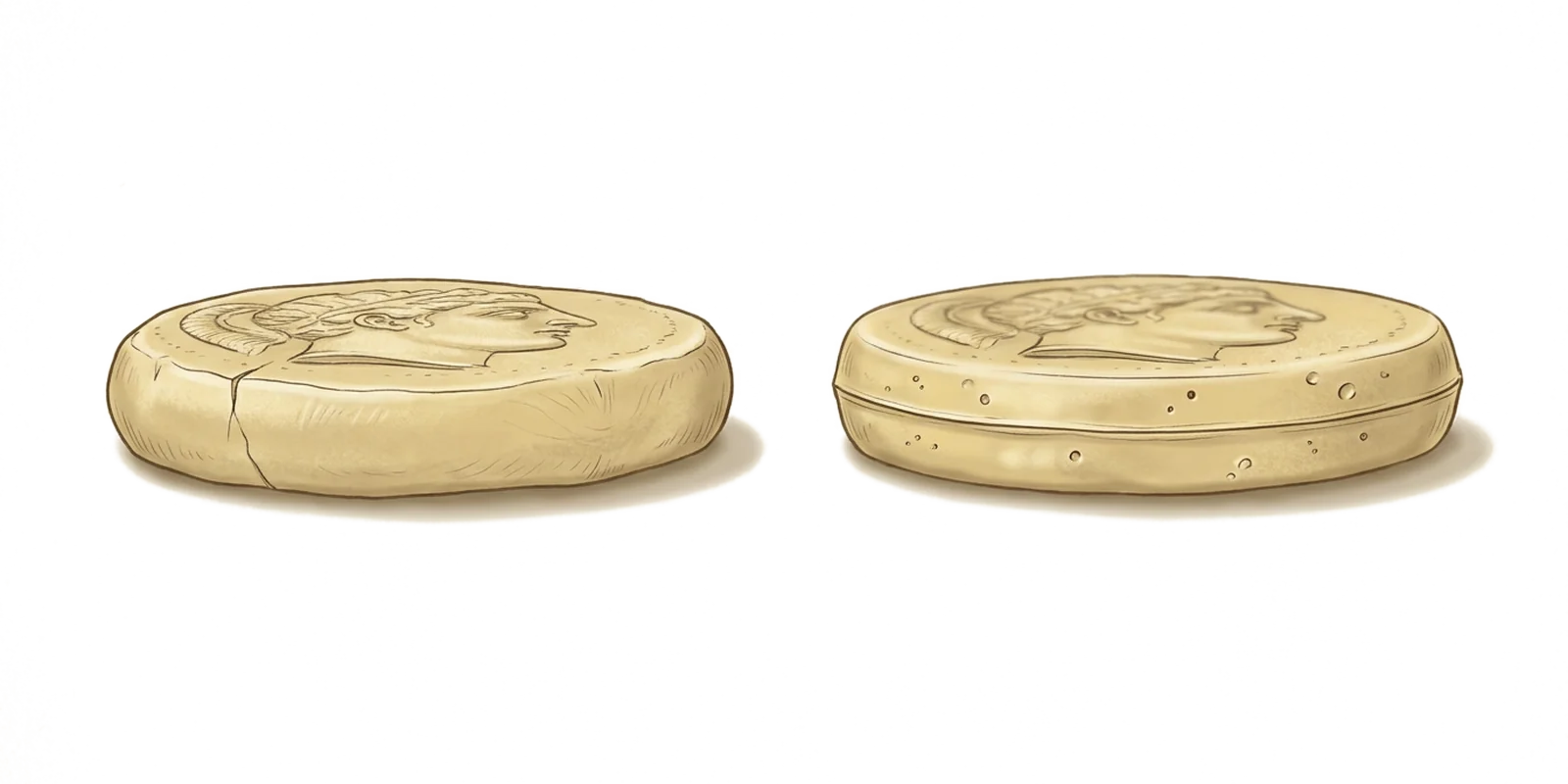
Edge-on: a struck coin (left) and a cast copy with a seam round its edge (right)
Struck · genuinerounded edge, flan crack, flow linesCast · copyseam round the edge, pinholes, soft detail
The seam is where the two halves of the mould met. Illustration; not real coins.
8 of 14 · 19th century

Cast, not struck

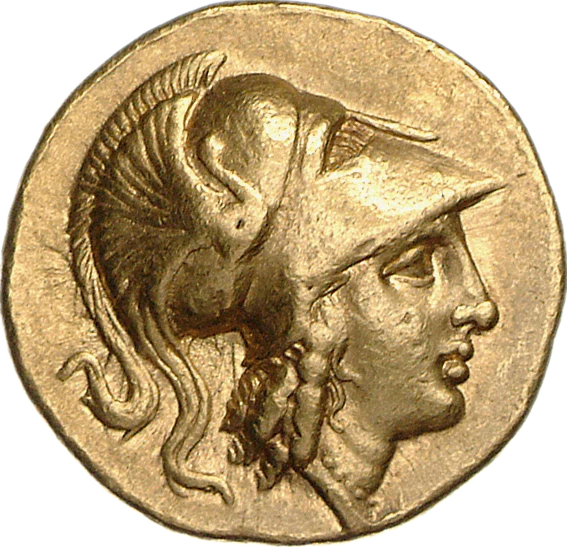
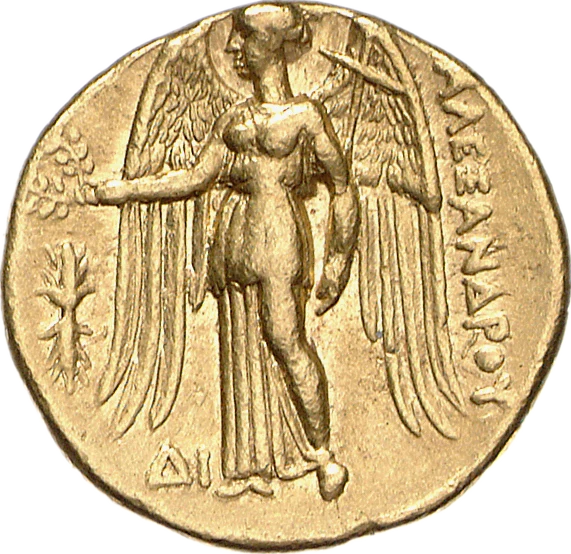
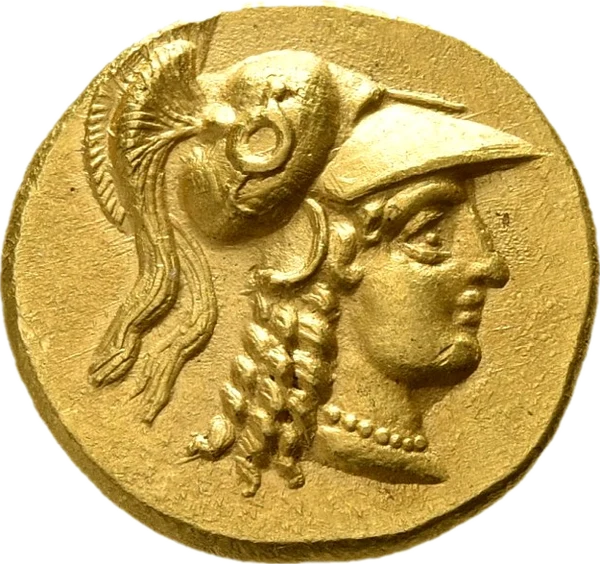
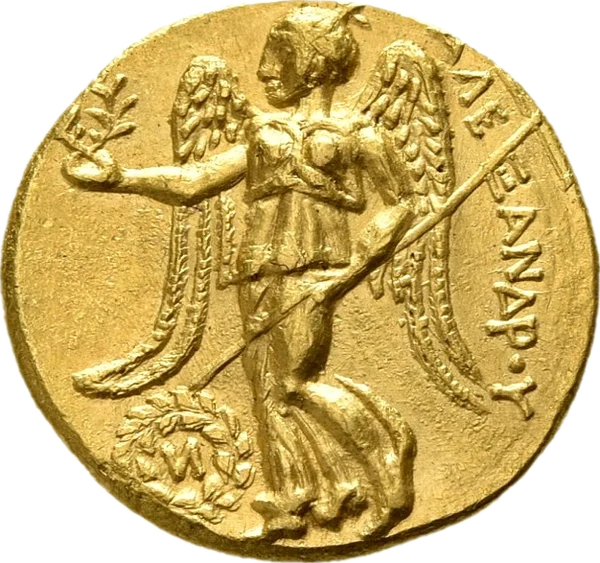
Real ancient coins were struck between two dies. A cheap fake is cast: hot metal poured into a mould taken from a real coin. Here is a real stater of Alexander beside a gold cast of a different variety. Always look at the edge.

Picture: Münzkabinett, Staatliche Museen zu Berlin · Public Domain Mark
Tell me more

Both are gold and weigh almost the same, so a scale would not catch this one. They are not the same variety, so don't judge the fake by its style: the real one was struck at Memphis in Egypt, with a thunderbolt and ΔI beside Nike, while the copy has an N in a double wreath, a variety the standard catalogue lists only as "not seen". A cast is moulded from a real coin, so the design can look right. Berlin's curators record this one as cast before 1869. The first place to look on any cast is the edge. A mould comes in two halves, so a cast often has a thin raised line running round its edge where they met, or a flat band of fine file scratches where the forger filed that line away. A struck coin's edge is rounded and uneven, often with small cracks where the metal spread under the blow. A seam is a warning, not proof on its own: some genuine blanks were themselves cast in moulds before they were struck. Other signs of a cast: soft, rounded letters; tiny bubbles or pits; a coin slightly smaller and lighter than the original, because metal shrinks as it cools; and the same flaws on every copy.

Alexander the Great's gold stater, both in Berlin. Top: real, struck about 323–316 BC, 8.54 g. Bottom: a 19th-century cast in gold, 8.50 g.

Source: Münzkabinett Berlin 18216073: gold stater of Alexander III, about 323–316 BC ↗ · Münzkabinett Berlin 18253001: cast forgery of an Alexander stater, before 1869; Price Index 535, 'not seen' ↗ · F. Michael Fazzari, 'Edges can reveal coin to be a fake', Numismatic News (2011): the raised ridge where the two halves of a mould met ↗ · Münzkabinett Berlin 18260814: cast forgery of Seleukeia Pieria, its edge filed ↗

  • Münzkabinett Berlin 18216073 and 18253001
9 of 14 · modern

Fantasies (types never struck in gold)

A warning sign: a 'gold' coin that copies a city's famous silver design line for line.

Tell me more

Massalia (Marseille) struck silver drachms with Artemis and a lion. This lovely gold version in Paris is catalogued by the Bibliothèque nationale itself as a modern fake. Wroth made the same point about the Amyntas gold: it is not usual for Greek gold to repeat the silver of its day exactly. That is why the catalogue leaves out gold of Massalia and of Amyntas.

Source: BnF record: FAUX moderne. Statère, or, Massalia (via Wikimedia Commons) ↗

  • Bibliothèque nationale de France, btv1b10334622s
  • Wroth 1899, introduction (Amyntas)

How experts catch them

FrontBack
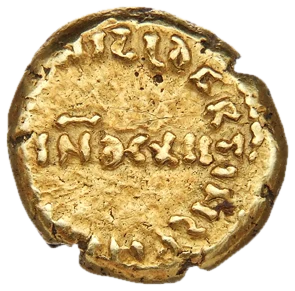
Why this coin: its dies also struck other known forgeries, so the die link alone gives it away. Berlin, 4.27 g, made in the 19th century.
10 of 14

Die links

Every genuine coin was struck by one pair of dies, and specialists have catalogued the dies of many coinages. A coin that does not fit the record gives itself away.

Picture: Münzkabinett, Staatliche Museen zu Berlin · Public Domain Mark
Tell me more

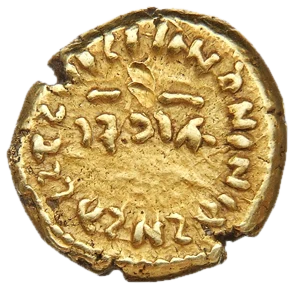
In a die study a specialist gathers photographs of every known coin of a type and sorts them by the die that struck each side, down to tiny slips of the engraver's tool. The result is a family tree: which front die was used with which back dies, and in what order, as the dies wore and cracked. A forger who copies a real coin can get one side right and still be caught: the front may match a known die while the back matches none, or the two sides make a pair that never existed. A fake struck from a die copied off a real coin also repeats that coin's knocks and scratches, on every piece. Die links cut both ways: a die shared with known fakes condemns a coin, and a die shared with coins from old finds supports it. This gold coin in Berlin, made to look like early Arab gold in the style of Byzantine solidi, was unmasked that way: it shares its dies with known forgeries, its letters are the wrong shape, and its gold is too pure. It had reached the museum before 1875.

Source: Münzkabinett Berlin 18236214: forgery of early Arab gold, die-identical with known forgeries ↗

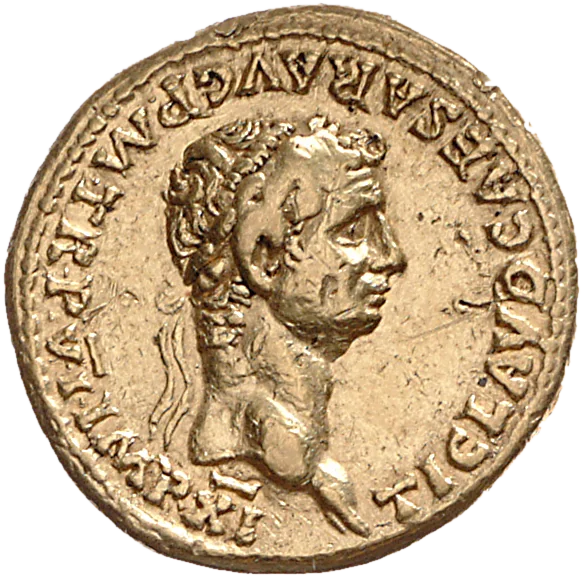
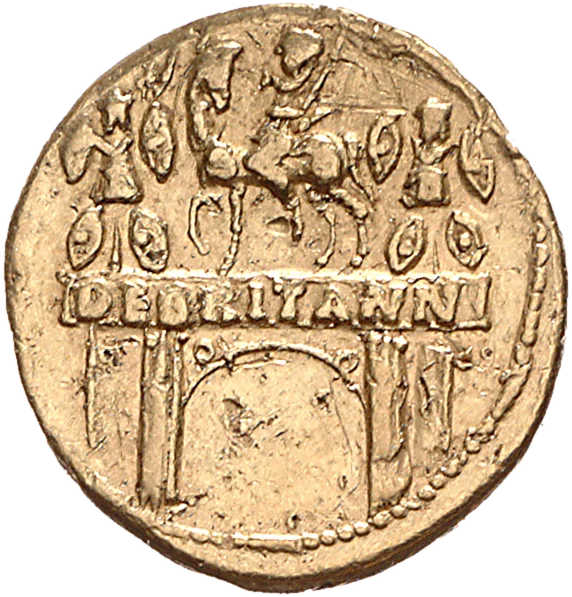
Real: ClaudiusReal: triumphal arch with a horseman
Real: Claudius, aureus, Rome, AD 46–47, 7.72 g. In Berlin since 1685.
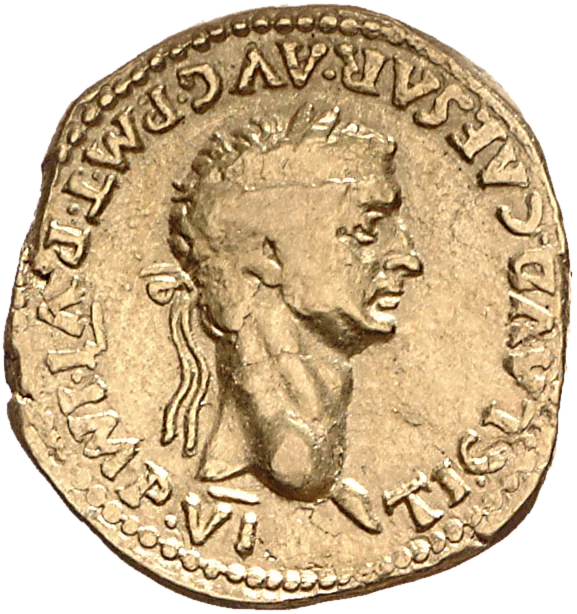
Fake: ClaudiusFake: triumphal arch with a horseman
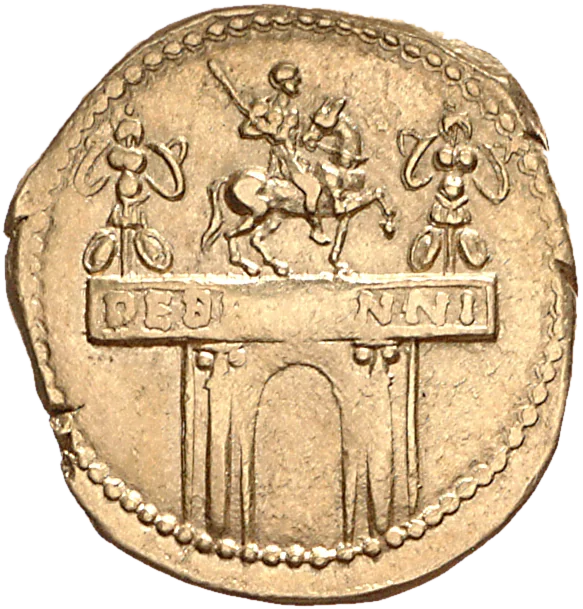
Fake: struck in gold, 7.52 g. Wrong titles, and the horseman rides the wrong way.
11 of 14

Wrong titles, wrong face

Forgers copy pictures well and history badly. This 'aureus' of Claudius, shown under a real one, gives him titles that never went together in any year of his reign.

Picture: Münzkabinett, Staatliche Museen zu Berlin · Public Domain Mark
Tell me more

Roman titles count the years, so a legend has to fit one moment: here IMP VI and TR POT VI clash, TR P is spelled T P, and the statue on the arch faces the wrong way. Two more from the same pair of dies are in London and Glasgow, so the forger made several. Berlin unmasked a Domitian the same way: the portrait is the older face he had years after this type was struck.

Source: Münzkabinett Berlin 18219465: forged aureus of Claudius ↗ · Münzkabinett Berlin 18233247: forged aureus of Domitian ↗ · Münzkabinett Berlin 18219452: aureus of Claudius, triumphal arch (real) ↗

SponsianBack
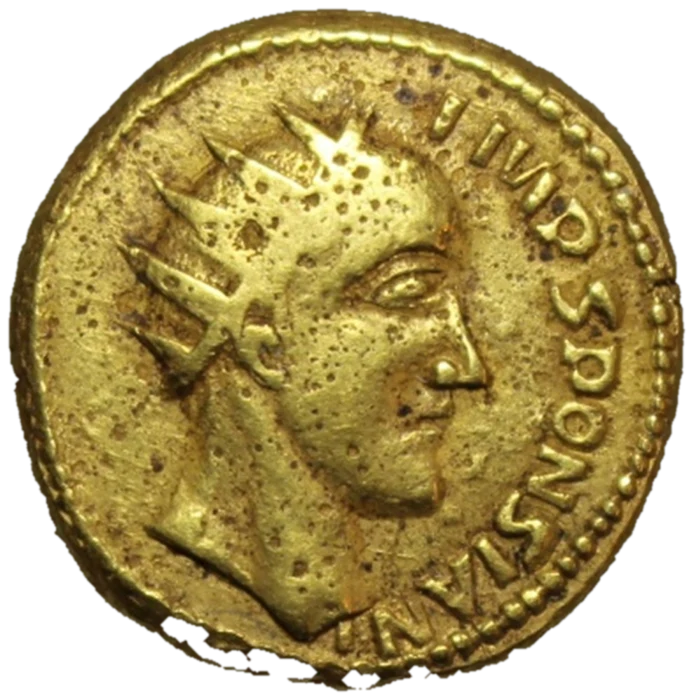
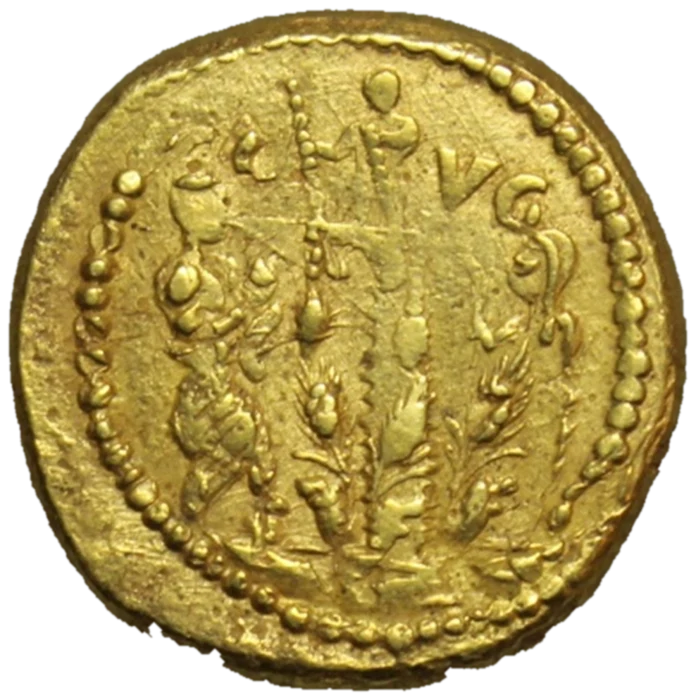
The Sponsian coin in the Hunterian, Glasgow.
12 of 14

Fake, or a lost emperor?

For 150 years the gold coins of 'Sponsian' were called crude fakes. In 2022 scientists argued they are real, and that Sponsian ruled Roman Dacia around AD 260.

Tell me more

The coins are cast, not struck, heavy, and copy a Republican design 400 years older: every warning sign at once. But under the microscope the team at University College London and the Hunterian in Glasgow found deep wear like coins rubbed together in a purse, and earth deposits laid down on top of the wear during a long burial. Sceptics, among them the British Museum's curator of Roman coins, answer that forgers could fake wear and dirt. A Sponsian coin dug up in a proper excavation would settle it.

Historians disagree: Still argued: the 2022 team says genuine, many numismatists still say an early modern forgery.

Source: Pearson et al., 'Authenticating coins of the Roman emperor Sponsian', PLOS ONE (2022), open access ↗ · American Numismatic Society, Pocket Change: the sceptical case ↗

  • Pearson et al., PLOS ONE 17(11) (2022)
  • American Numismatic Society, 'Is Sponsian real? Further considerations'

Before you bid

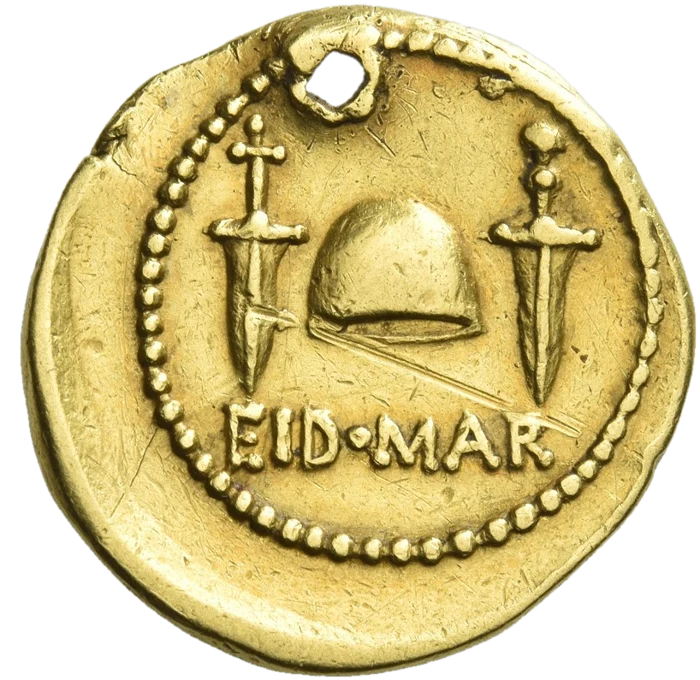
Brutus, with a hole above his headCap of liberty between two daggers, EID MAR
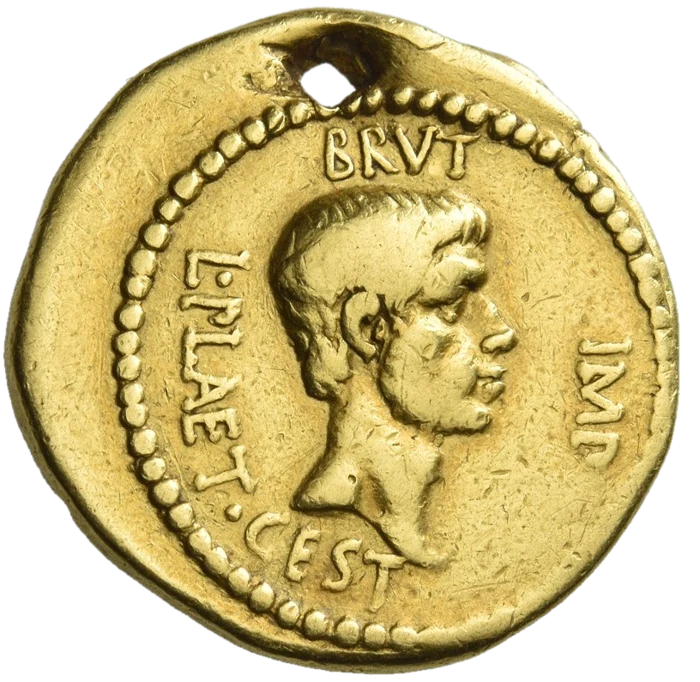
Holed: the gold EID MAR, 42 BC, pierced above Brutus's head to be worn. Sold by NAC in 2022.
13 of 14

Holed, tooled or ex-jewellery

Not every problem coin is fake. Many real gold coins were worn as jewellery: pierced for a cord, or set in a loop that was later cut off.

Picture: Numismatica Ars Classica · Auction photo
Tell me more

Even the gold EID MAR shown here, one of only three known, was pierced above Brutus's head so someone could wear it. Collectors call such a coin 'holed', and 'plugged' if the hole was later filled. Other genuine coins are 'tooled': fields smoothed, scratches polished out, hair or letters re-cut. Good auction houses say so, with words like holed, ex jewellery, mount removed, tooled, smoothed or repaired. Such coins are genuine and still worth having if the strike is strong, but they should be priced against other repaired coins, not perfect ones.

Source: NAC 132 catalogue, lot 474: the pierced gold EID MAR ↗

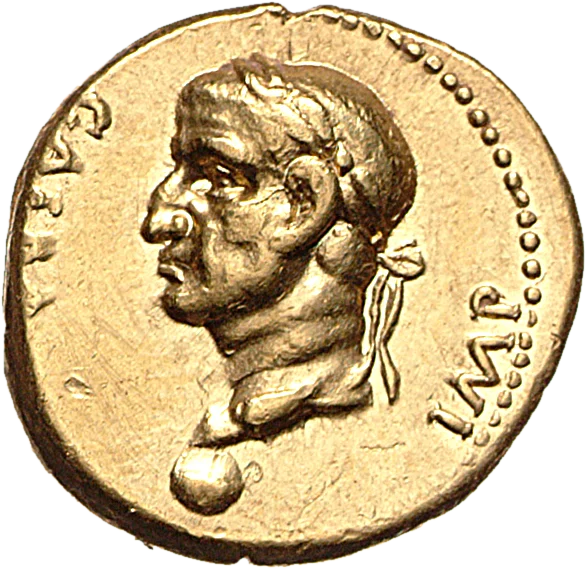
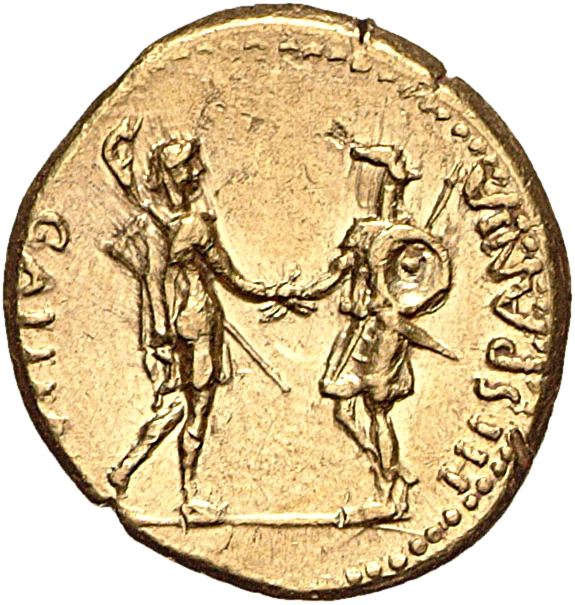
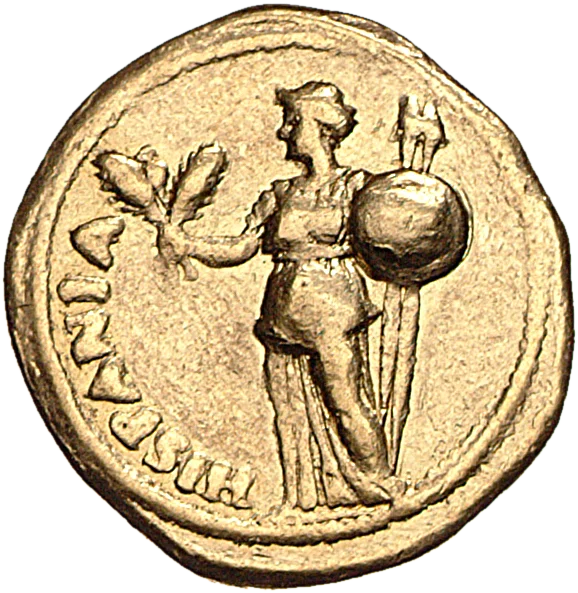
Real: GalbaReal: Gallia and Hispania
Real: Galba, aureus, AD 68–69, 7.72 g.
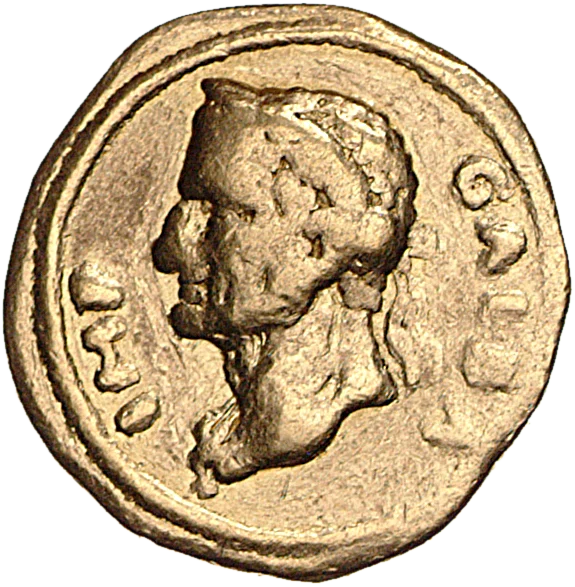
Fake: GalbaFake: Hispania
Fake: struck in gold, 7.55 g. In Berlin before 1810.
14 of 14 · today

Before you bid

The best modern fakes are struck from engraved steel dies and look right in a photo, so the checks that matter are about the seller and the coin's history.

Picture: Münzkabinett, Staatliche Museen zu Berlin · Public Domain Mark
Tell me more

Since the 1990s workshops in Bulgaria and elsewhere have made struck copies of Greek and Roman gold and silver; police have seized their dies, and catalogues of them are published. Famous coins attract them most. Before bidding: buy from a house that guarantees authenticity for life and belongs to a trade body (IAPN, PNG), whose experts can call on the IAPN forgery bureau; look for a provenance, an 'ex' line naming an older sale or collection; check the weight against the type; look for die matches with published coins; and look at the edge. A good struck fake can pass a photo and the scale. Berlin's gold 'aureus' of Galba, below the real one, weighs 7.55 g, almost the same, and copies a real type. Side by side its portrait is flat and lifeless, but seen alone in a sale it could pass. It reached the museum before 1810.

Source: IAPN Anti Forgery Committee and International Bureau for the Suppression of Counterfeit Coins ↗ · Münzkabinett Berlin 18227154: aureus of Galba (real) ↗ · Münzkabinett Berlin 18227155: struck forgery of a Galba aureus ↗

  • Prokopov and others, Modern Counterfeits and Replicas of Greek and Roman Coins from Bulgaria
  • IAPN, Anti Forgery Committee and IBSCC